Christmas Party Venues in East London With No Curfew
The curfew is always discovered late.
The date is fixed. The invitation has gone out. The DJ is booked and paid for. And then, somewhere in the final paperwork, you find the line: music off at 23:00, premises cleared by 23:30. You now have a Christmas party that stops at eleven, which is not an evening. It is a long drinks reception with a dance floor nobody gets to use.
This is the most common and most avoidable disappointment in London Christmas party planning, and it happens because almost nobody thinks to ask about it in the first conversation. Venues rarely lead with it. It is not in the brochure, it is not on the website, and it tends to surface at the contract stage when you have already emotionally committed.
This guide explains how curfews actually work in East London, the three questions that will get you a straight answer in one email, and what changes about a party when the clock is genuinely not a factor.
The short answer
Most small and mid-sized East London venues carry a hard finish between 23:00 and midnight, and a meaningful number stop at 22:30. Late licences exist, but they are concentrated in commercial buildings away from housing, and the ones that genuinely run past 1am are a small minority of the market.
STU 22 in Wapping has no building curfew. It is a licensed, exclusive-hire venue — three connected rooms, up to 135 guests, a staffed bar — where a Christmas party can run late into the night rather than stopping at eleven, with the late finish and the licensed drinks service hours both confirmed when you book. Festive hire is £3,500 + VAT for the whole venue.
Why so many East London venues stop at eleven
It is not venues being awkward. There are three separate forces at work, and understanding them tells you which venues are worth asking.
Residential neighbours. East London's nightlife grew up inside neighbourhoods where people live, and over the last fifteen years a great many of those warehouses became flats. A venue's licensed hours are granted by the local council, and where there is housing nearby the conditions attached are tighter: earlier finishes, noise limiters fitted to the sound system, restrictions on windows and doors being open, and rules about how guests disperse. A venue on a residential street in Hackney or Bethnal Green is working inside constraints that have nothing to do with how much they want your business.
The premises licence itself. Every licensed venue has one, and it specifies the hours during which it may sell alcohol, play recorded music and open to the public. Those hours are fixed. A venue cannot simply agree to a later finish because you asked nicely — it would be a licence breach, which risks the licence itself. So when a venue says eleven, eleven is usually a legal fact rather than a preference.
The landlord and the building. Separately from licensing, a lot of venues sit inside buildings with their own rules: shared entrances, other tenants, a managing agent, security who lock up at a set time. This is the one that catches people out most, because a venue can hold a late licence and still have to be out of the building by midnight. Two different clocks, and you need to ask about both.
There is a fourth factor worth knowing if you are looking at unlicensed spaces: the Temporary Event Notice. If a venue is not licensed and wants to serve alcohol for your party, somebody has to file a TEN with the council, which needs around ten working days' notice, is capped at 499 people, and can be objected to by the police or environmental health. In December, with every other company doing the same thing, that is a genuine risk sitting in the middle of your plan. A venue with its own licence removes it entirely.
The three questions that get you a straight answer
Send these three in your first email. They take a minute to write and they will save you the worst conversation in event planning.
1. "What time does the music have to stop, and what time do we have to be out of the building?"
Two separate answers, deliberately. Music-off and premises-clear are usually thirty to sixty minutes apart, and the second one is the one that determines whether your guests get a proper end to the evening or get herded out mid-song.
2. "Until what time can you serve alcohol, and is that under your own licence or a TEN?"
Licensed drinks hours frequently end before the music does — a venue might be open until 1am but stop serving at midnight. And if the answer involves a Temporary Event Notice, you want to know now, not in late November.
3. "Is the late finish confirmed in writing when we book, and is there an overtime charge if we run over?"
A verbal "we can usually be a bit flexible" is worth nothing at 11pm on a Friday in December. Get it in the contract. And ask the overtime rate, because if there is one, there is a curfew — they have just priced it.
If a venue answers all three clearly and in writing, you are dealing with a professional operation regardless of what the times turn out to be. If the answers are vague, that is your answer.
Three different deadlines, often confused
When people say "curfew" they usually mean one of these, and they are not the same thing. Clarity here is most of the battle.
The music curfew. When amplified sound has to stop, or drop to background level. Set by the premises licence and often enforced by a noise limiter wired into the sound system, which will cut your DJ off automatically whether anyone is watching or not.
The licensed hours. When the bar has to stop selling alcohol. Also set by the licence. Can end well before the venue closes, which produces the strange final hour where the party is still going but the bar has shut.
The building clearance time. When everyone — guests, your caterer, your DJ and his equipment — has to be physically out. Set by the landlord, the lease or the licence, whichever is strictest. This is the one that quietly determines whether your de-rig happens calmly overnight or in a panic at 11:45pm while 100 people queue for their coats.
A venue can have a late licence and an early clearance time, or a late clearance time and an early bar. Ask about all three.
What "no curfew" actually changes
It is tempting to treat this as a small detail. It is not — it changes the shape of the evening in four concrete ways.
The party gets to its good bit. A work Christmas party has a predictable arc. The first hour is awkward. The second hour is the food and the speeches. The room only properly warms up somewhere in the third hour. A party that ends at eleven ends roughly fifteen minutes after it becomes good, which is why so many of them are remembered as fine rather than great.
You stop managing the clock. With a hard finish you spend the evening doing arithmetic — moving the speeches earlier, cutting the awards short, telling the DJ to bring the good songs forward. With no curfew you run the evening in the order that makes sense and let it breathe.
The de-rig stops being a crisis. Styling comes down overnight rather than at midnight. Your caterer is not loading a van while guests look for their coats. Nobody from your team is still in the building at 1am sweeping up because the venue needed it empty.
Getting home gets easier, not harder. Counter-intuitive but true. A hard eleven o'clock finish puts your entire headcount onto the street at the same moment, competing for the same taxis, on the one night of the year when every other company's party is also turning out. A party that winds down gradually disperses gradually.
Where to look in East London, area by area
Wapping. Quiet, well connected, and largely commercial along the riverside streets. Overground from Wapping station, ten minutes to Shoreditch and ten to Canary Wharf, with Tobacco Dock and St Katharine Docks a short walk away. Taxis and rideshares reach the door easily, which matters at one in the morning in December far more than it does in June. This is where STU 22 is.
Shoreditch. The largest concentration of venues and the most competition for December dates. Prices peak here, dates go first, and because so much of Shoreditch is now residential above ground-floor commercial, late licences are less common than the area's reputation suggests.
Hackney Wick and Fish Island. Genuine warehouse spaces, some with real late licences because of the industrial surroundings. The trade-off is transport — getting 100 people home from Fish Island at 1am is harder than it looks on a map.
Bethnal Green and Cambridge Heath. Good railway-arch spaces at sensible prices. Arches sit under live railway lines and among housing, so noise conditions are often strict.
Canary Wharf. Corporate, well served by transport, and dominated by hotel function rooms and restaurant private dining. Reliable and usually expensive, with hard finishes being the norm rather than the exception.
Whitechapel and Aldgate. Improving fast, decent value, and a mix of hotel spaces and converted buildings. Worth asking the three questions, because the answers vary wildly street to street.
STU 22, Wapping: licensed, exclusive, no curfew
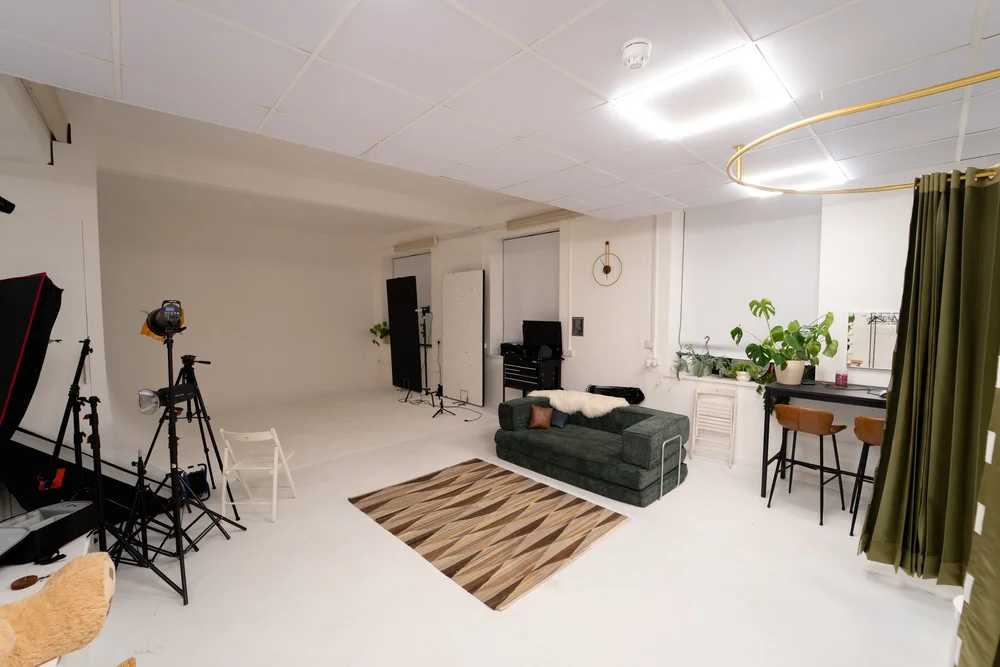
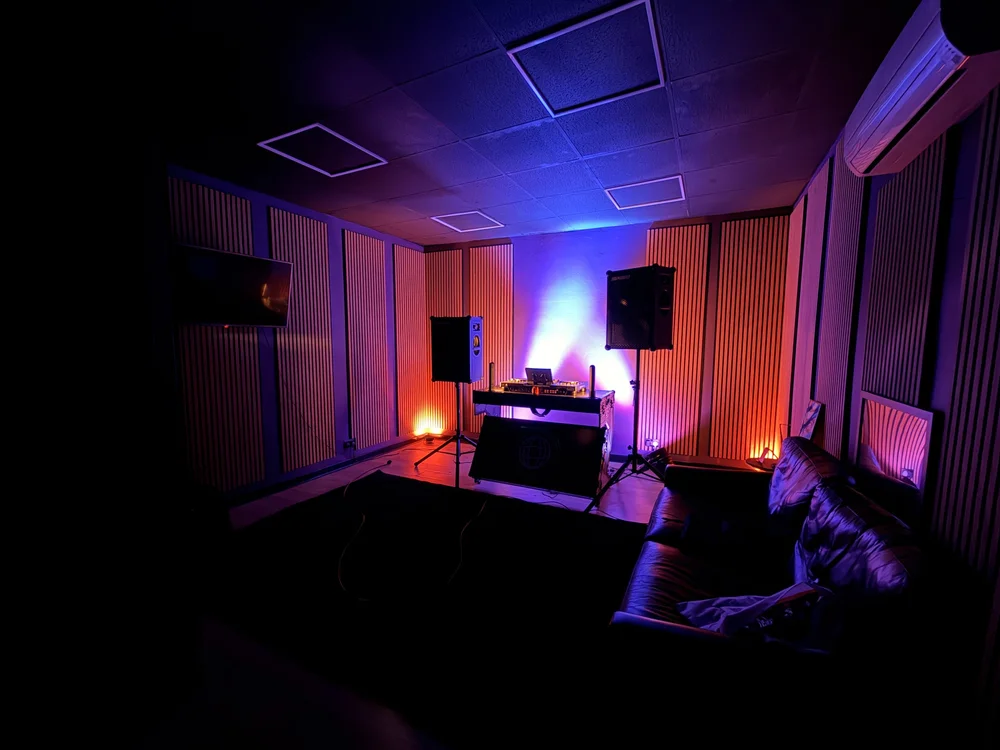
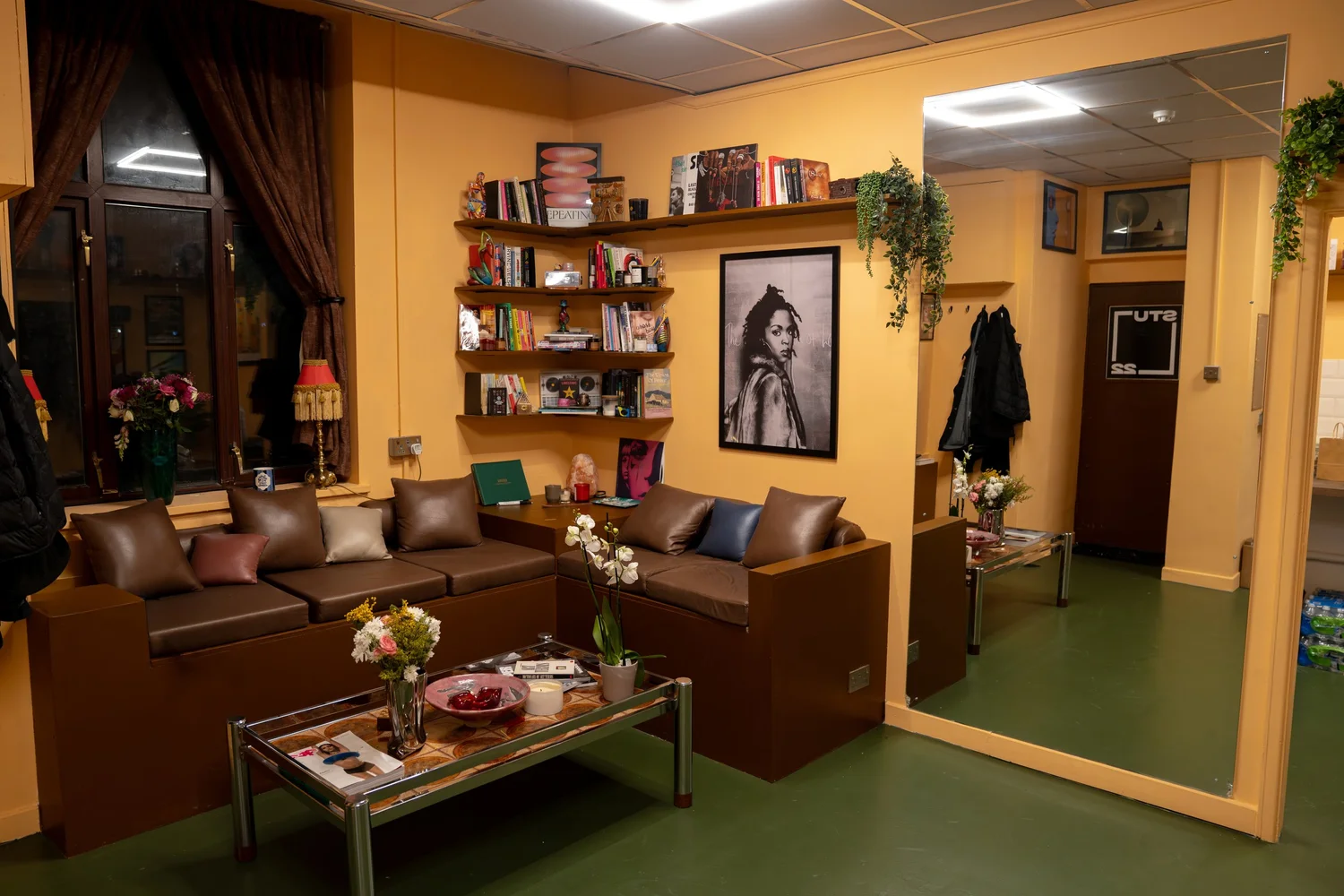
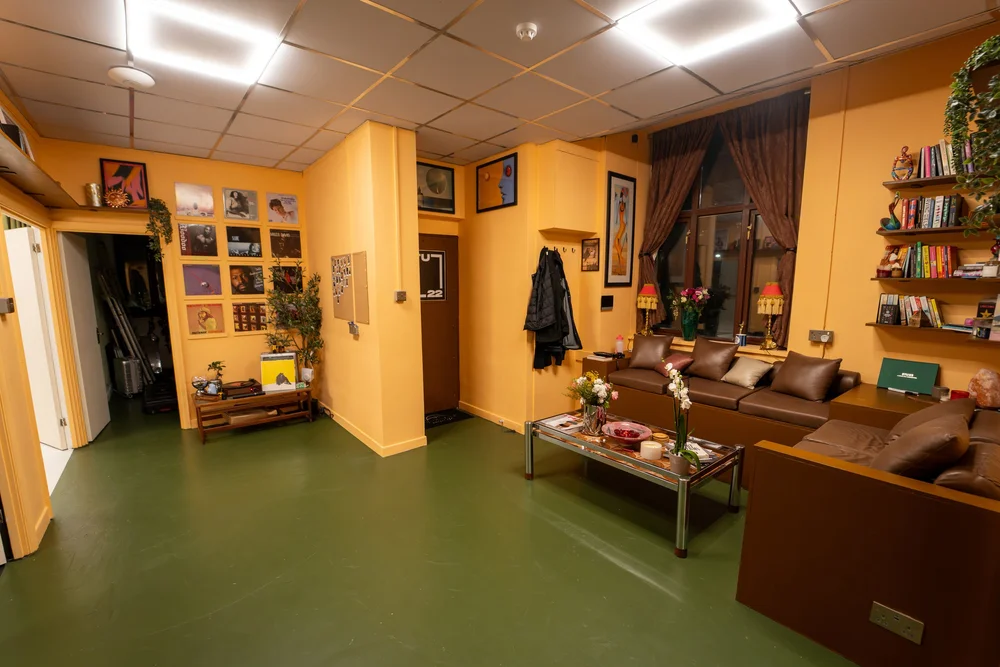
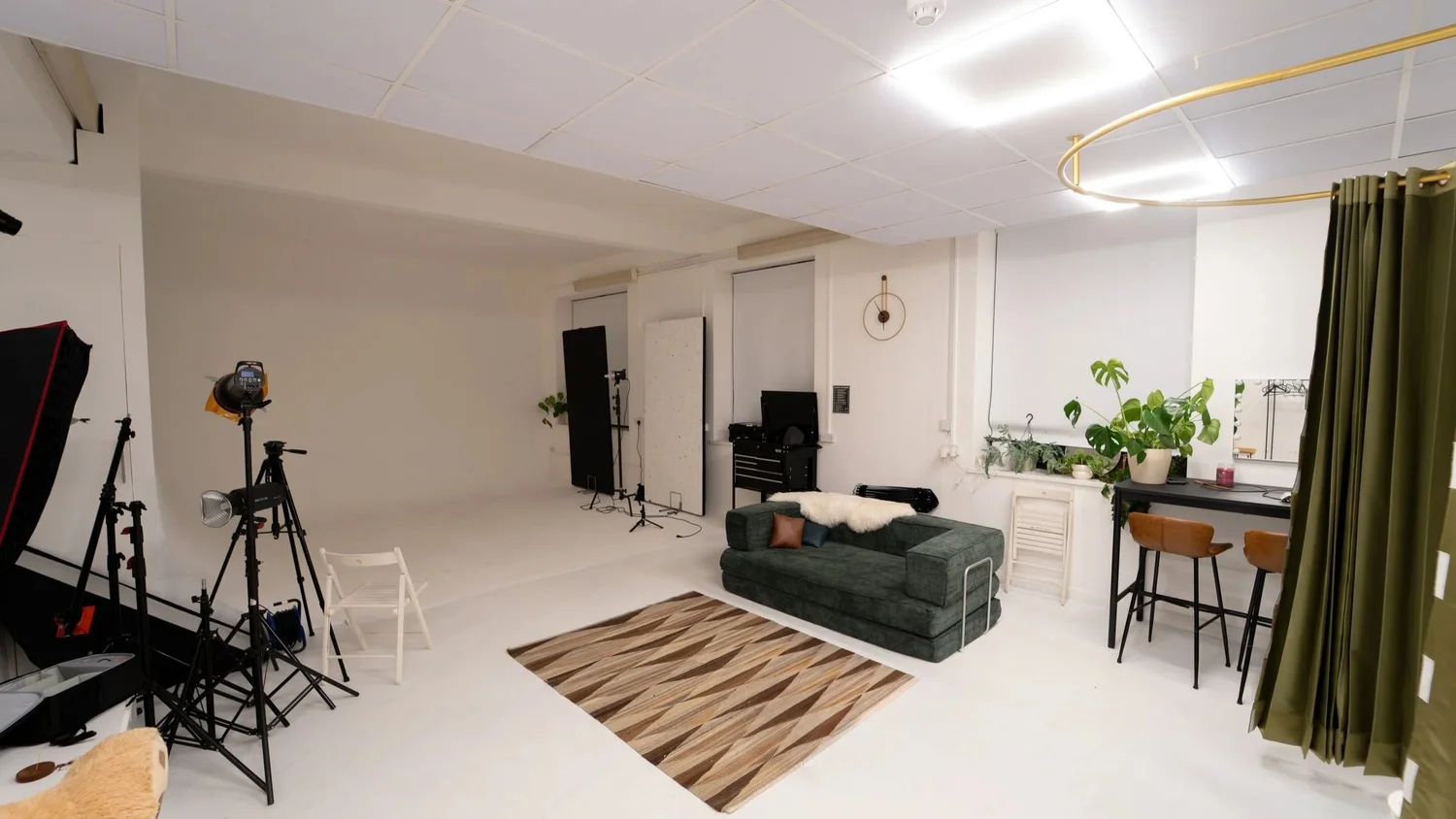
STU 22 is a working photography and music studio at 8–10 Sampson Street in Wapping that becomes an exclusive-hire Christmas party venue in December. Three connected rooms, up to 135 guests standing, and £3,500 + VAT for the whole building for a full evening.
There is no building curfew. The music can run on, the de-rig happens overnight instead of at 7am, and nobody is moving your team towards the door at the moment the room finally warms up. The late finish and the licensed drinks service hours are both confirmed when you book, in writing, which is the standard you should hold every venue to.
It is licensed. STU 22 holds its own alcohol licence, so there is no Temporary Event Notice, no ten-working-day wait and no paperwork landing on whoever at your company drew the short straw. The bar is staffed by our people with our glassware and ice, and you choose the format: a cash bar where guests pay for their own, a card tab with a ceiling you set, or a drinks package quoted per head. If you would rather supply your own drinks you still can, and there is no corkage.
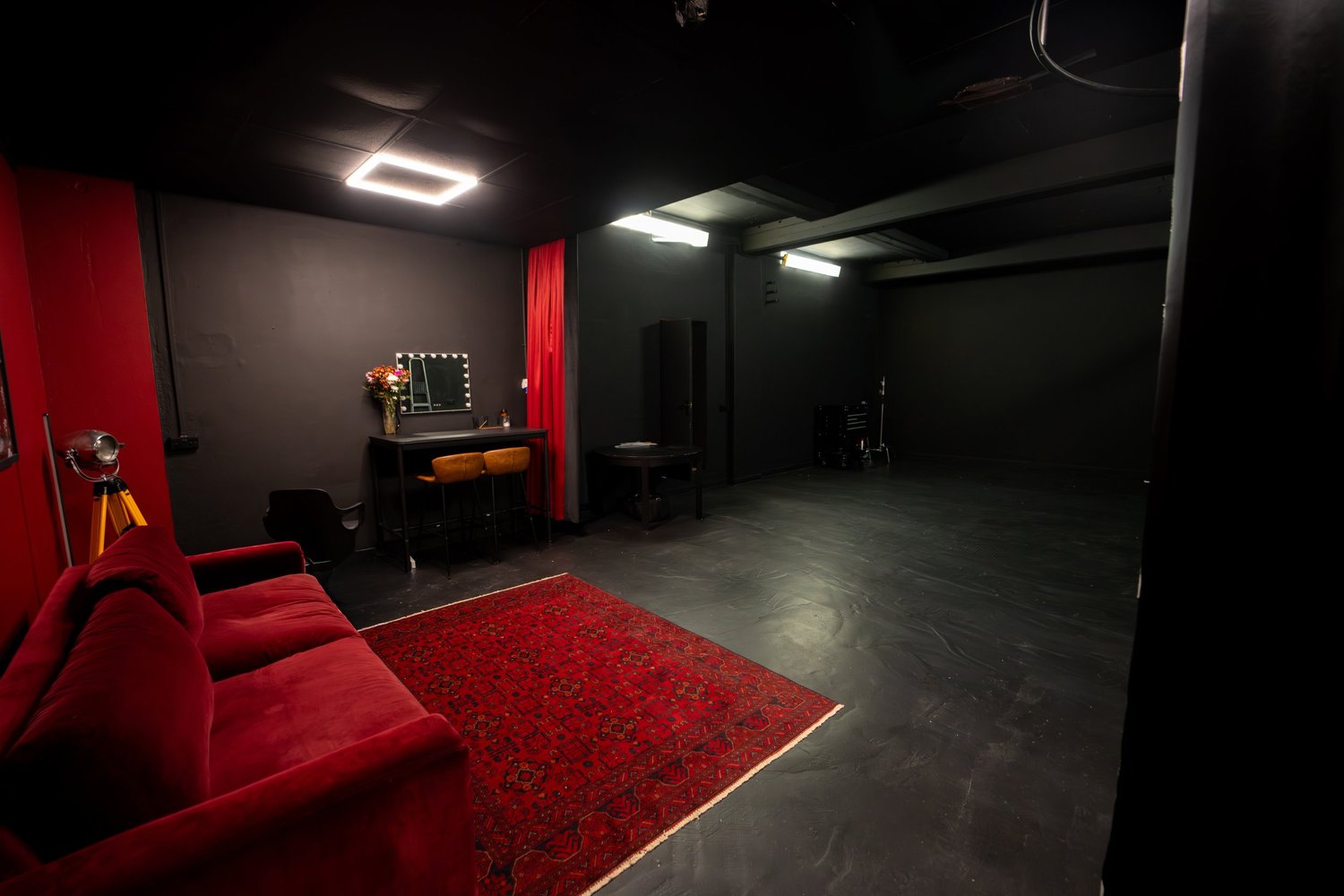
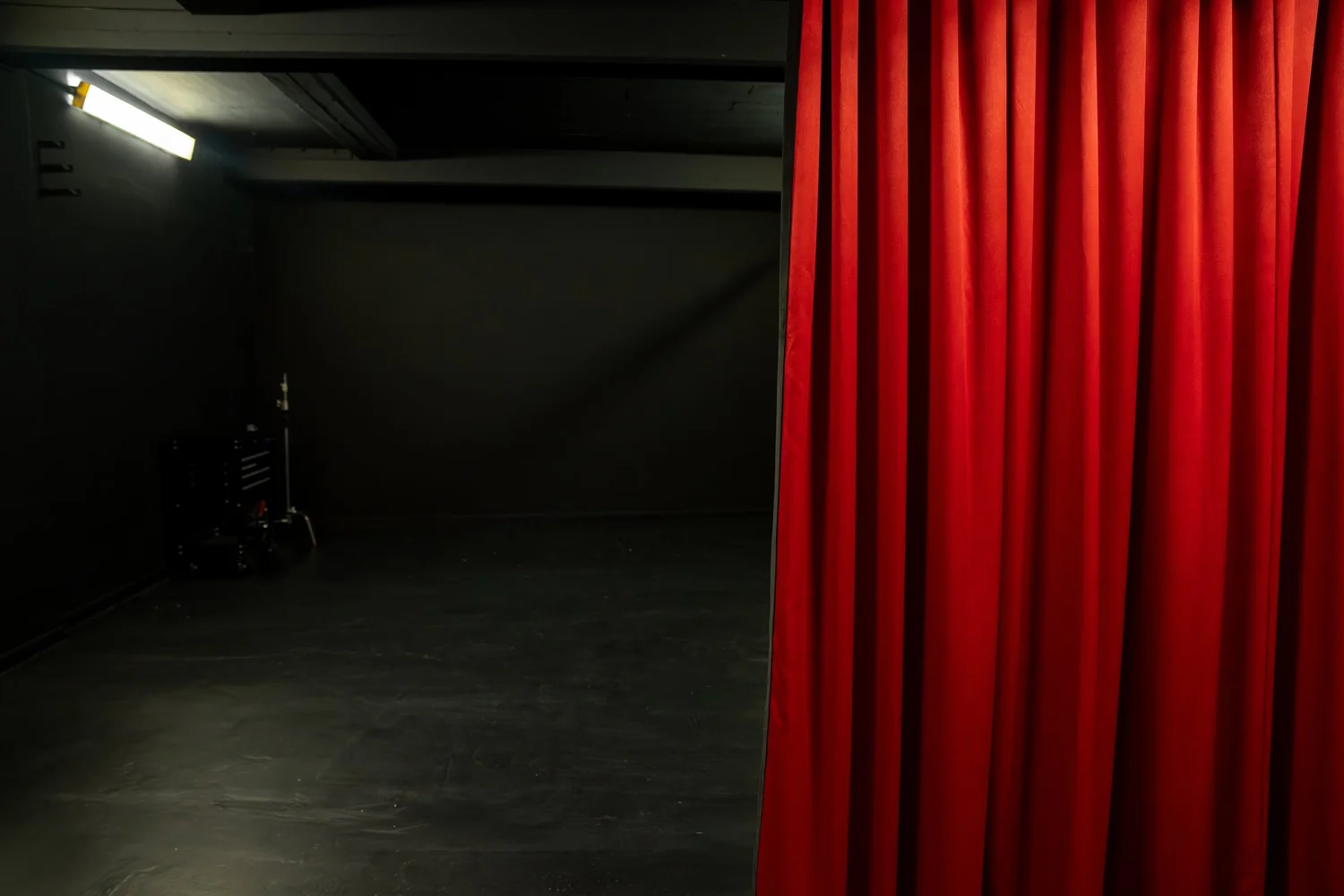
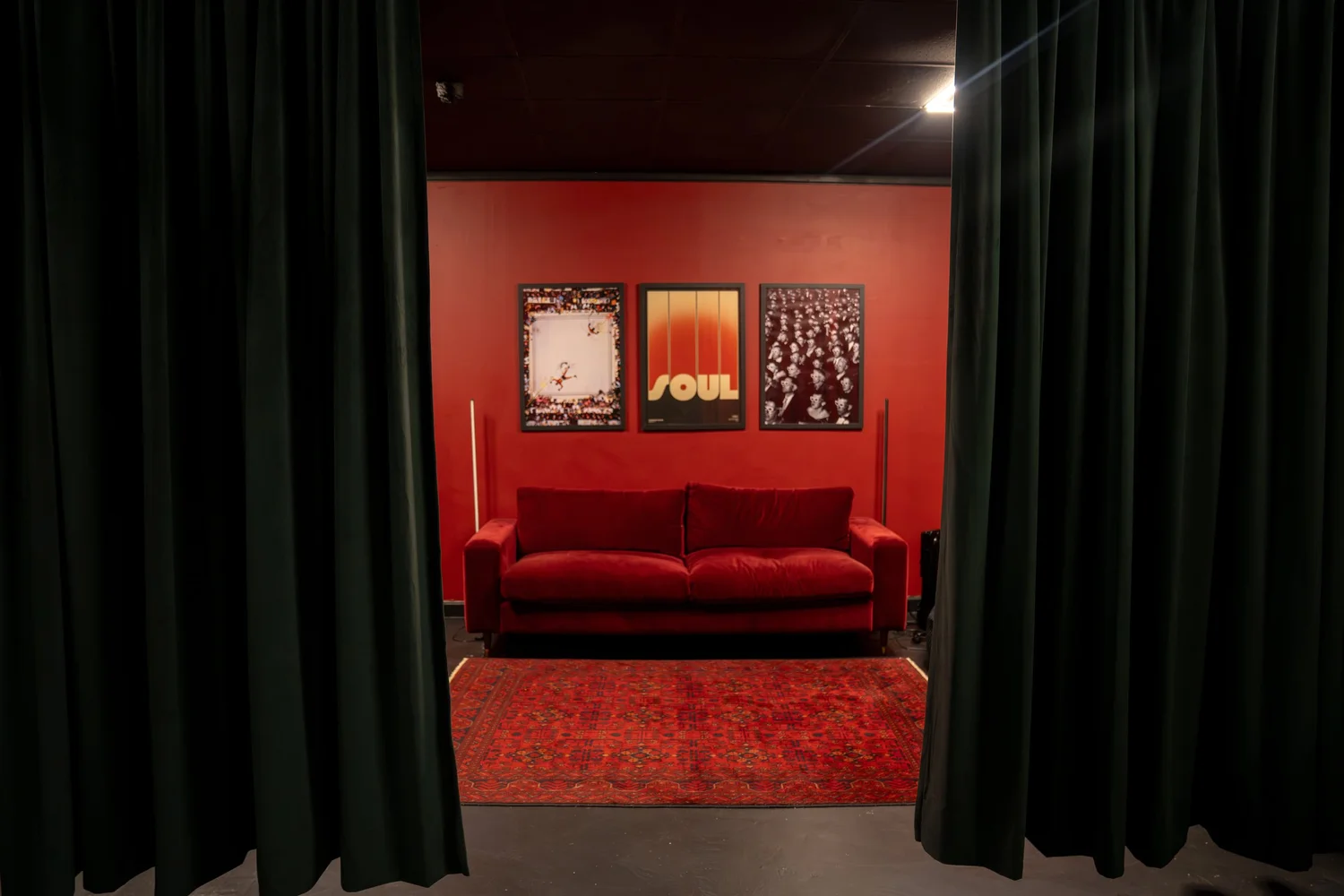
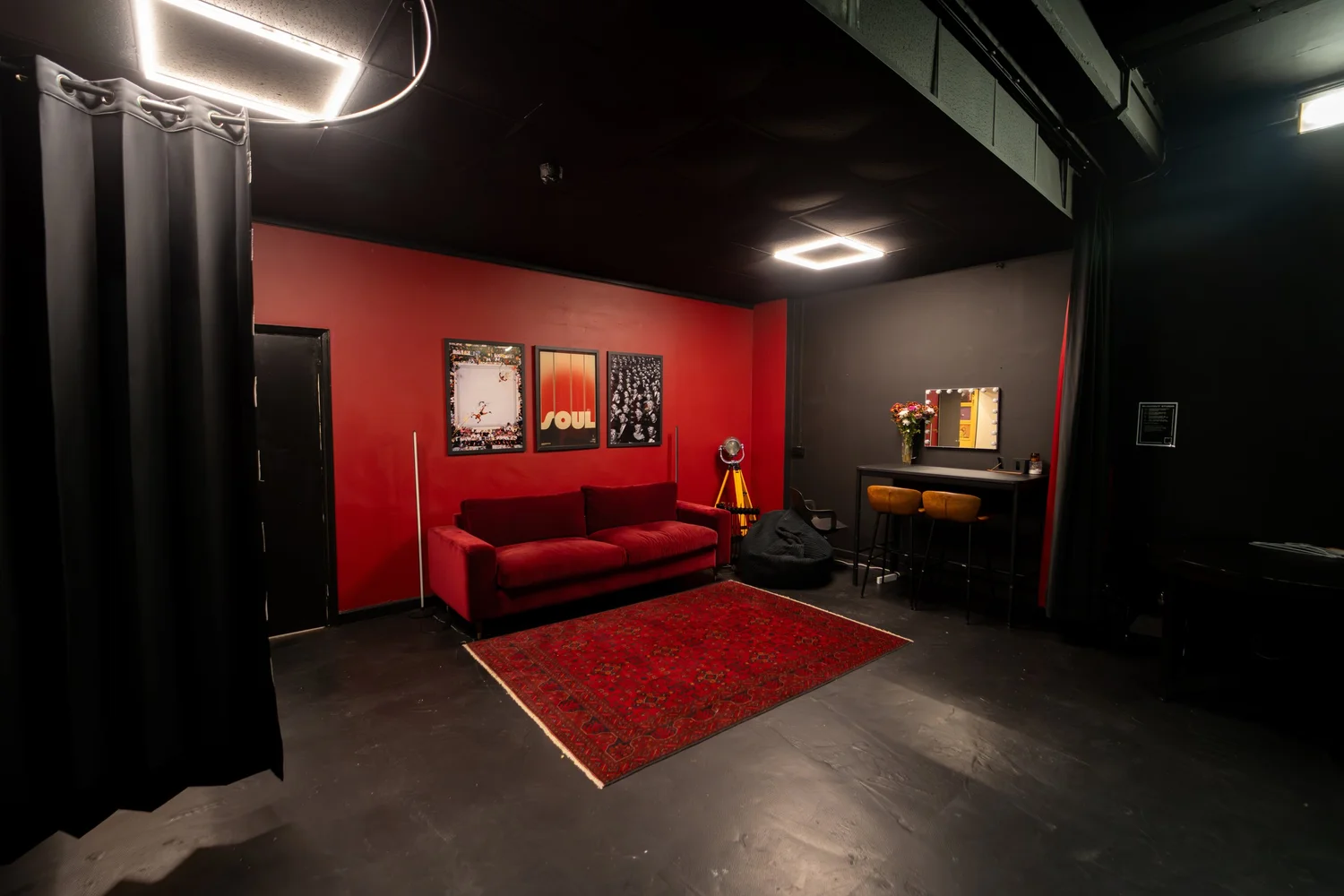
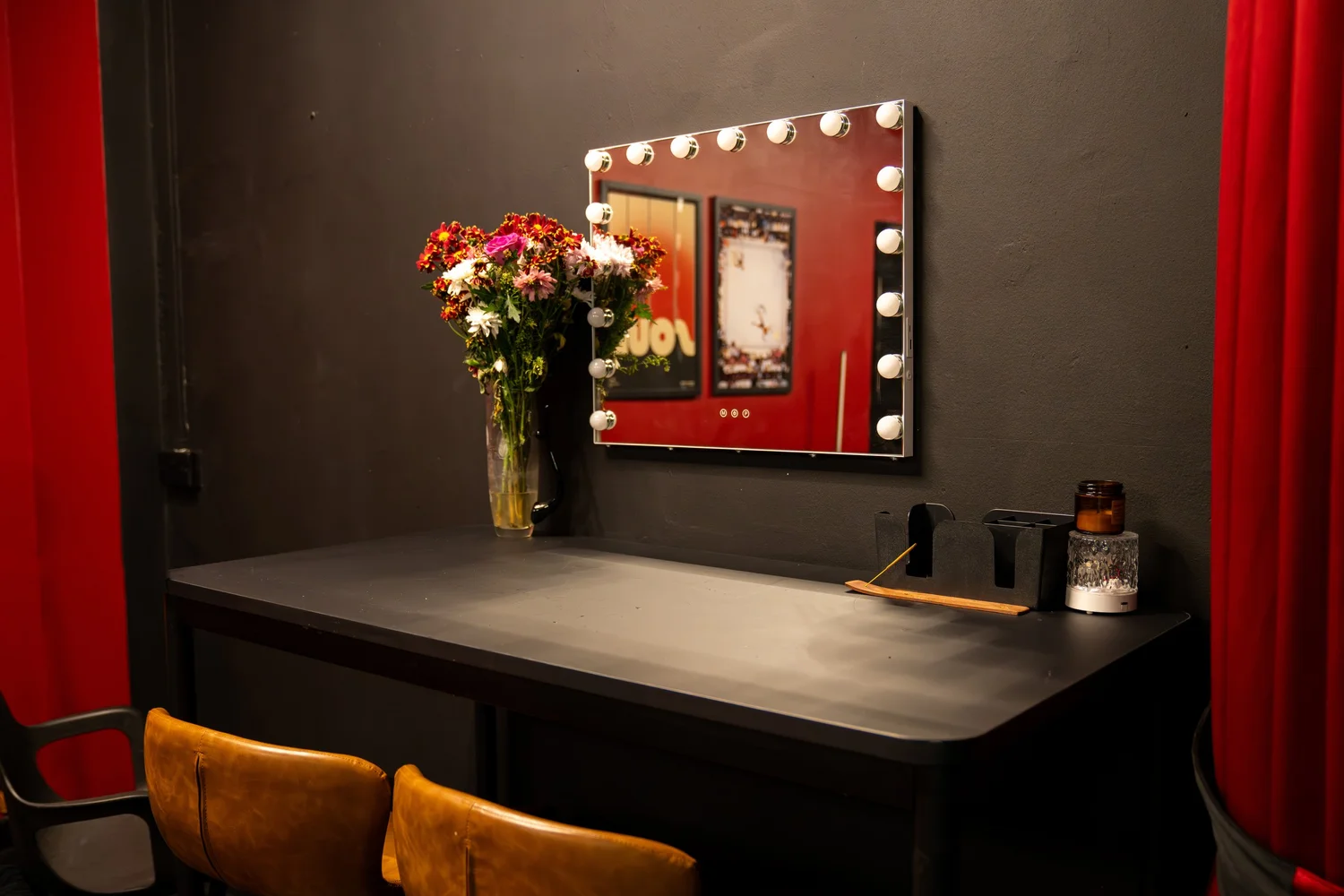
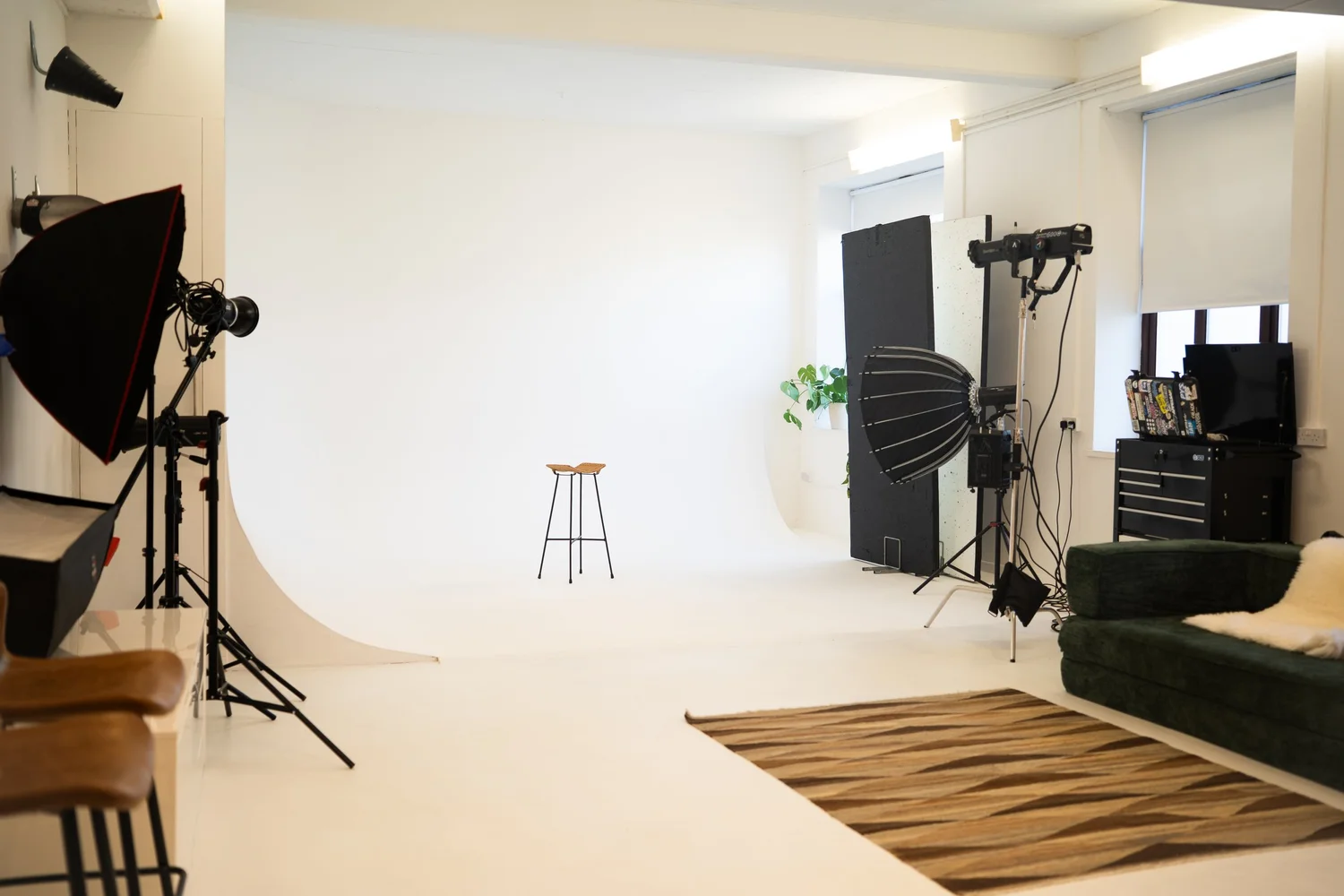
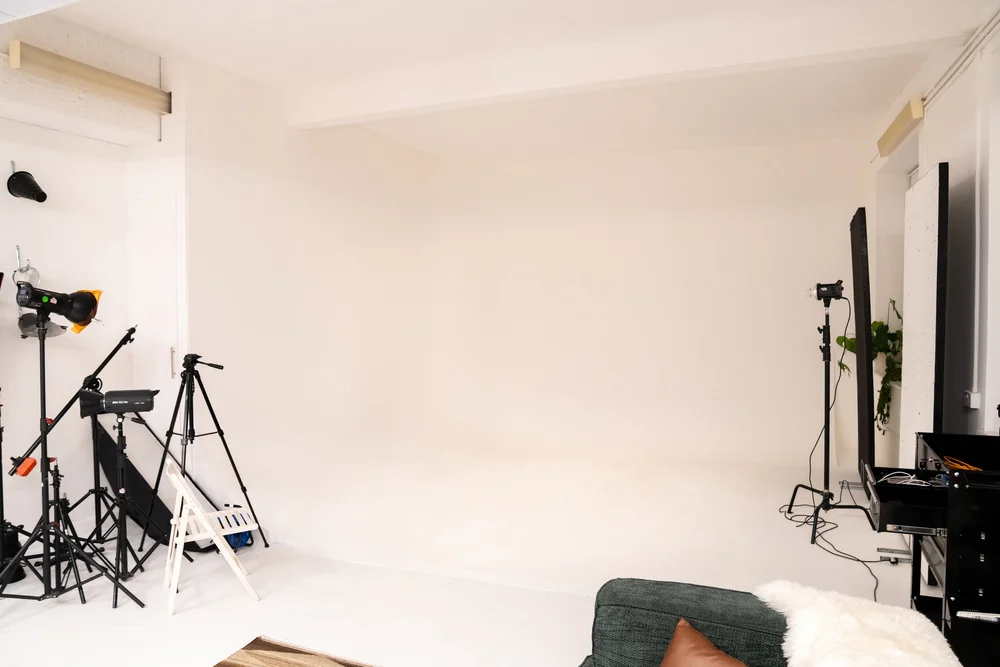
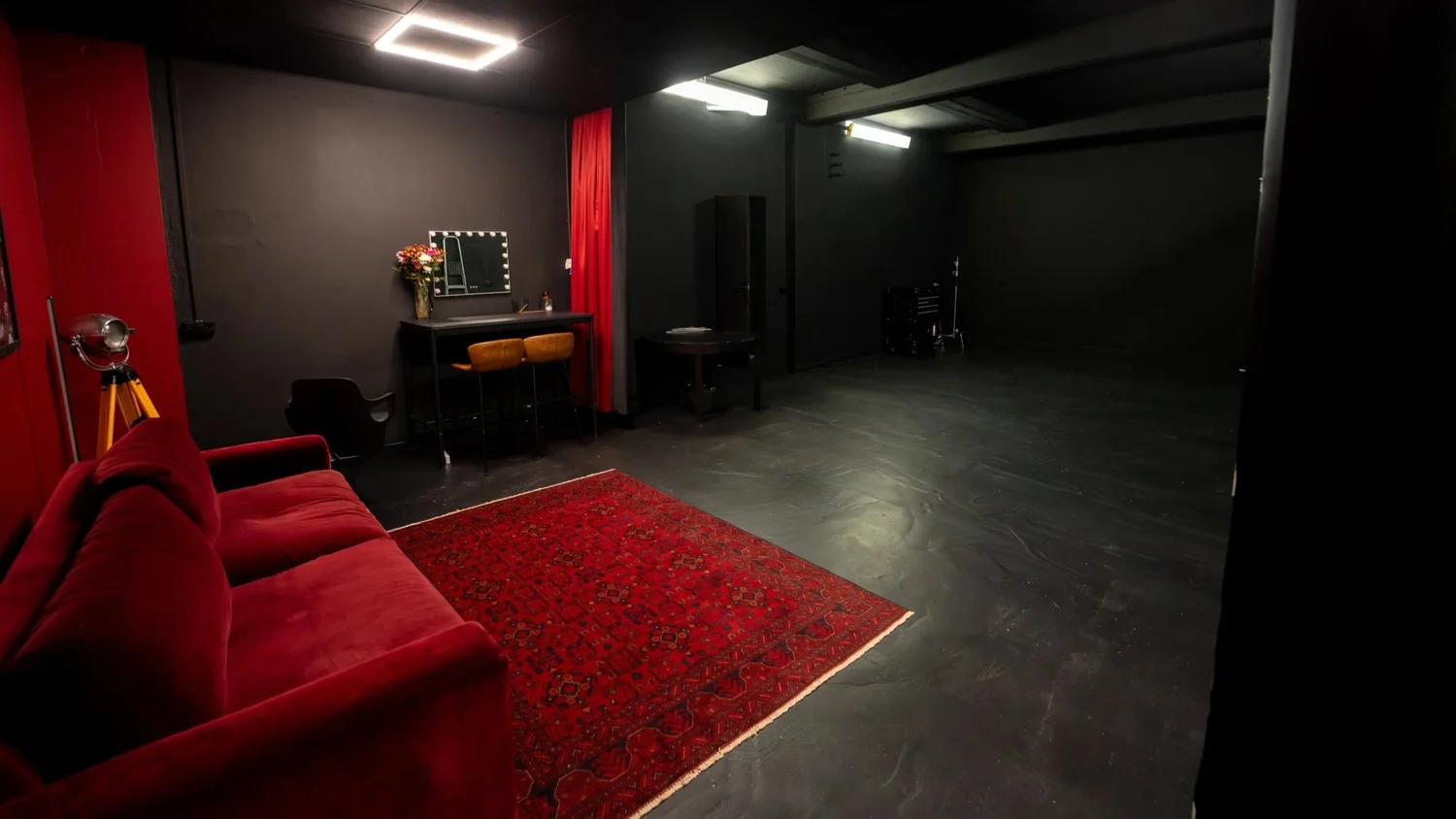
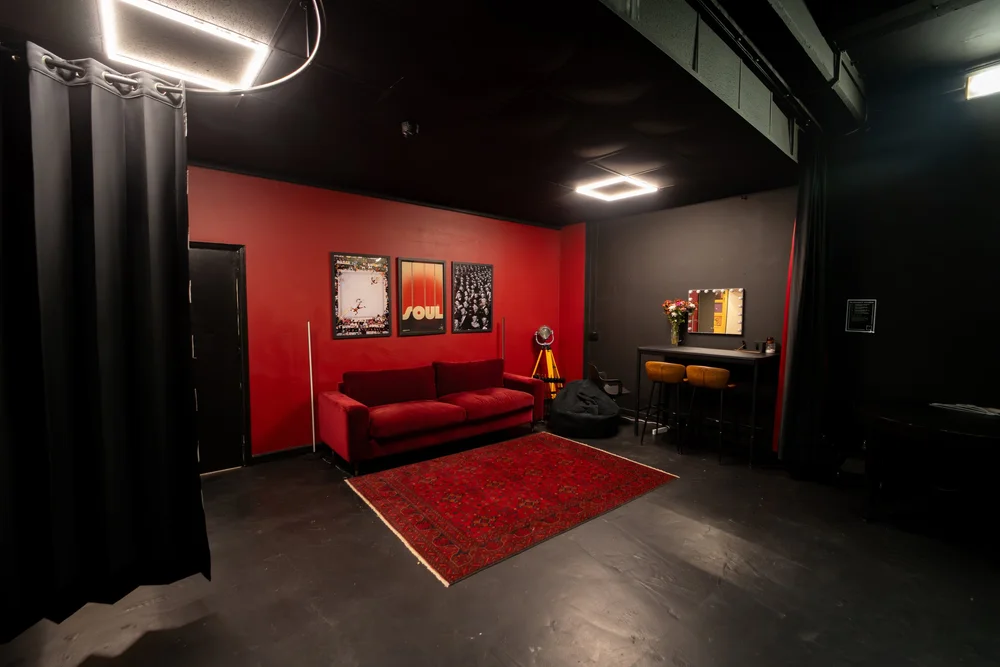
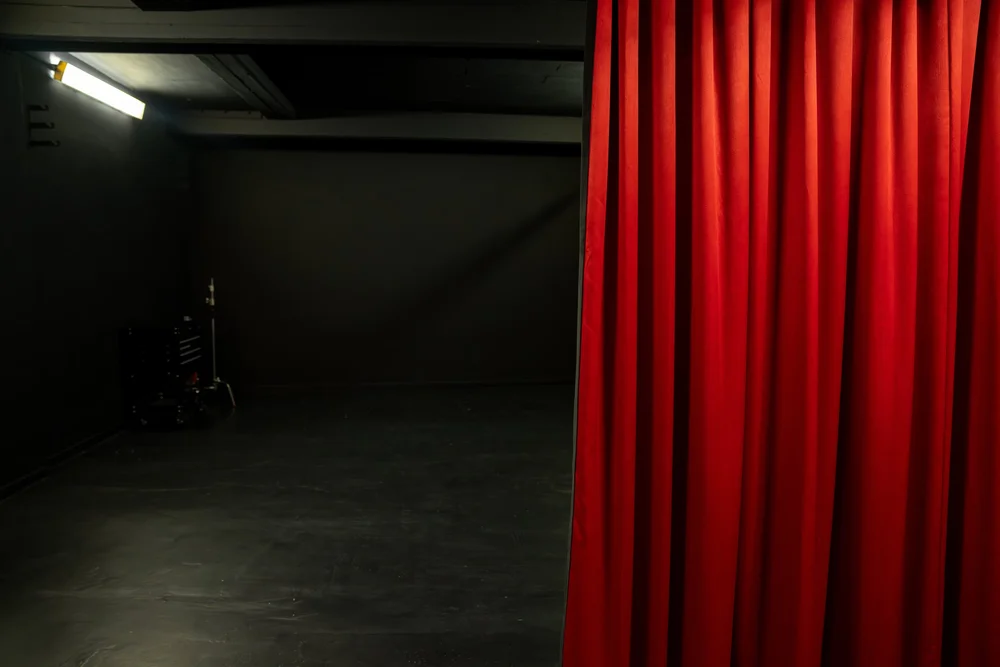
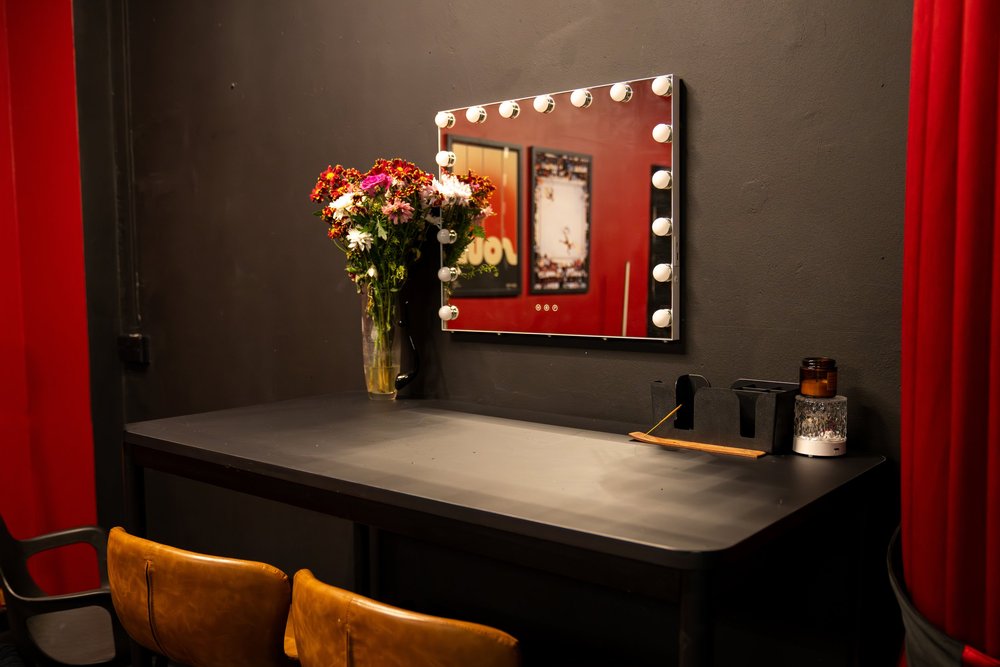
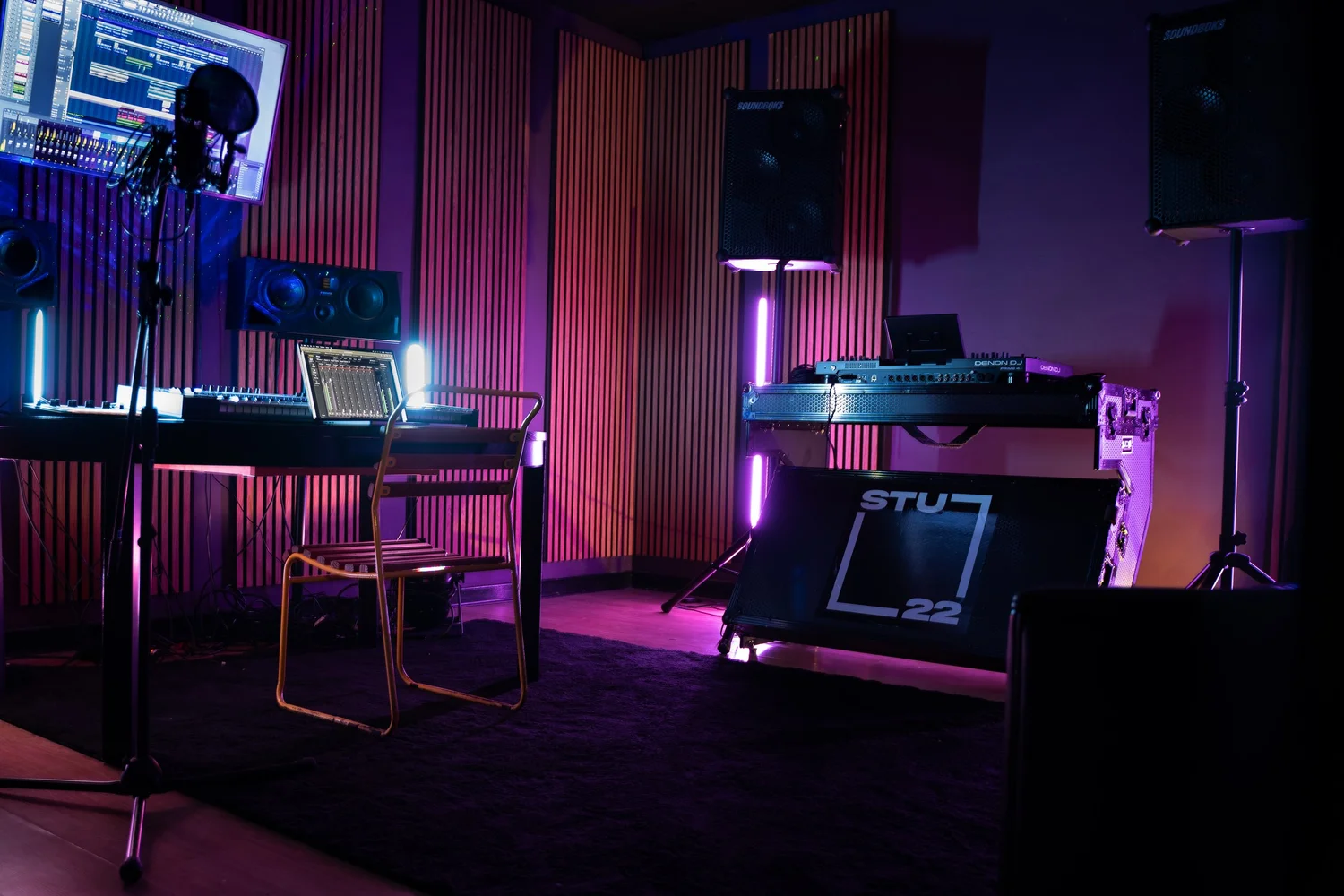
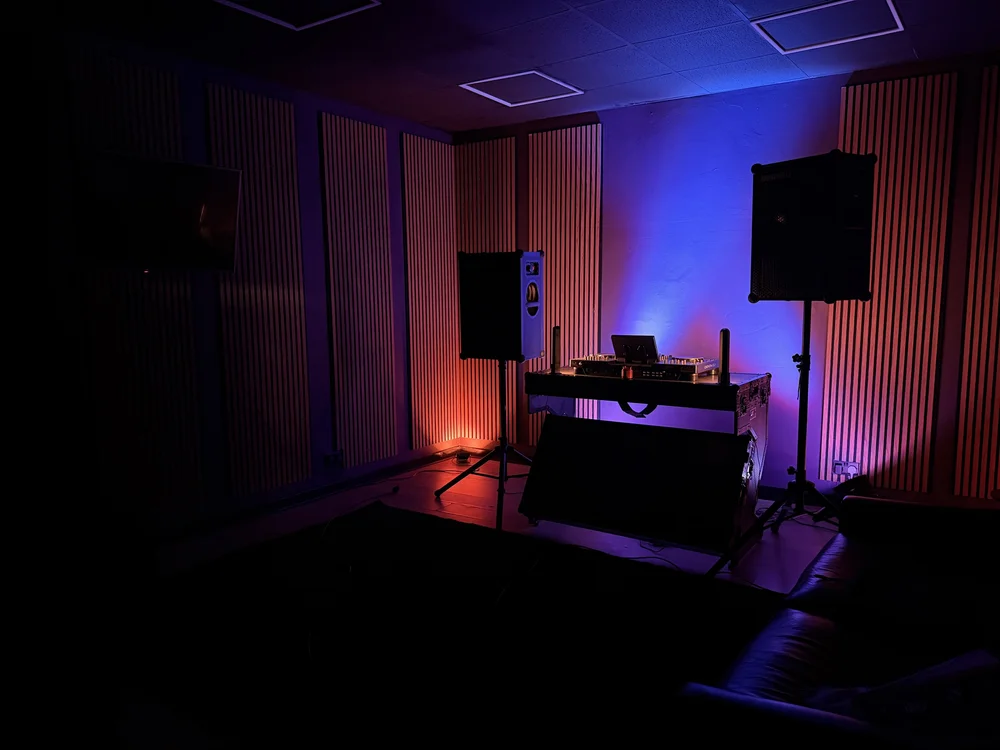
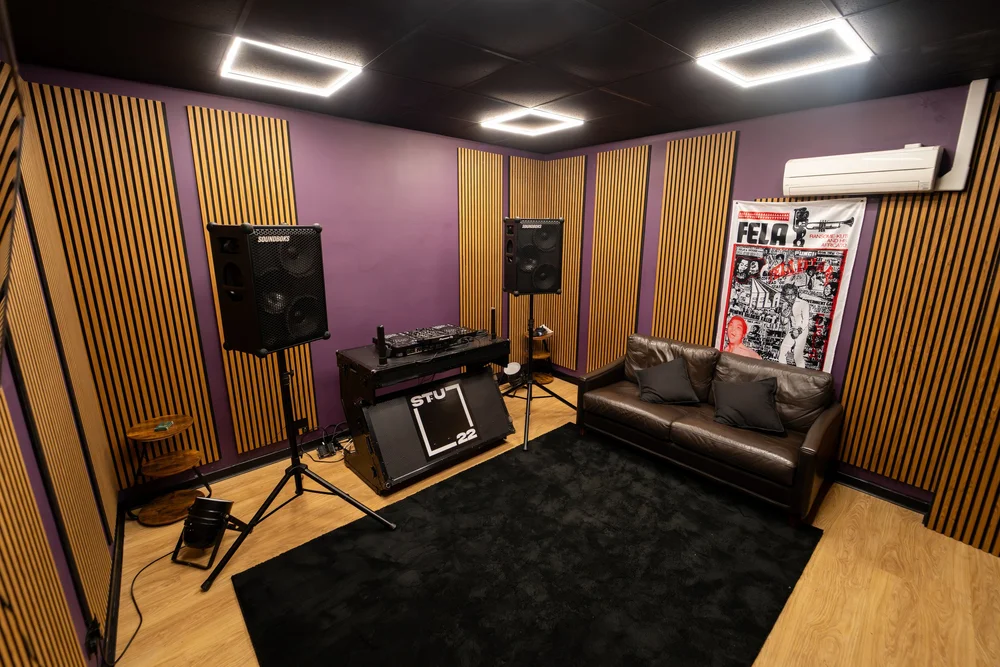
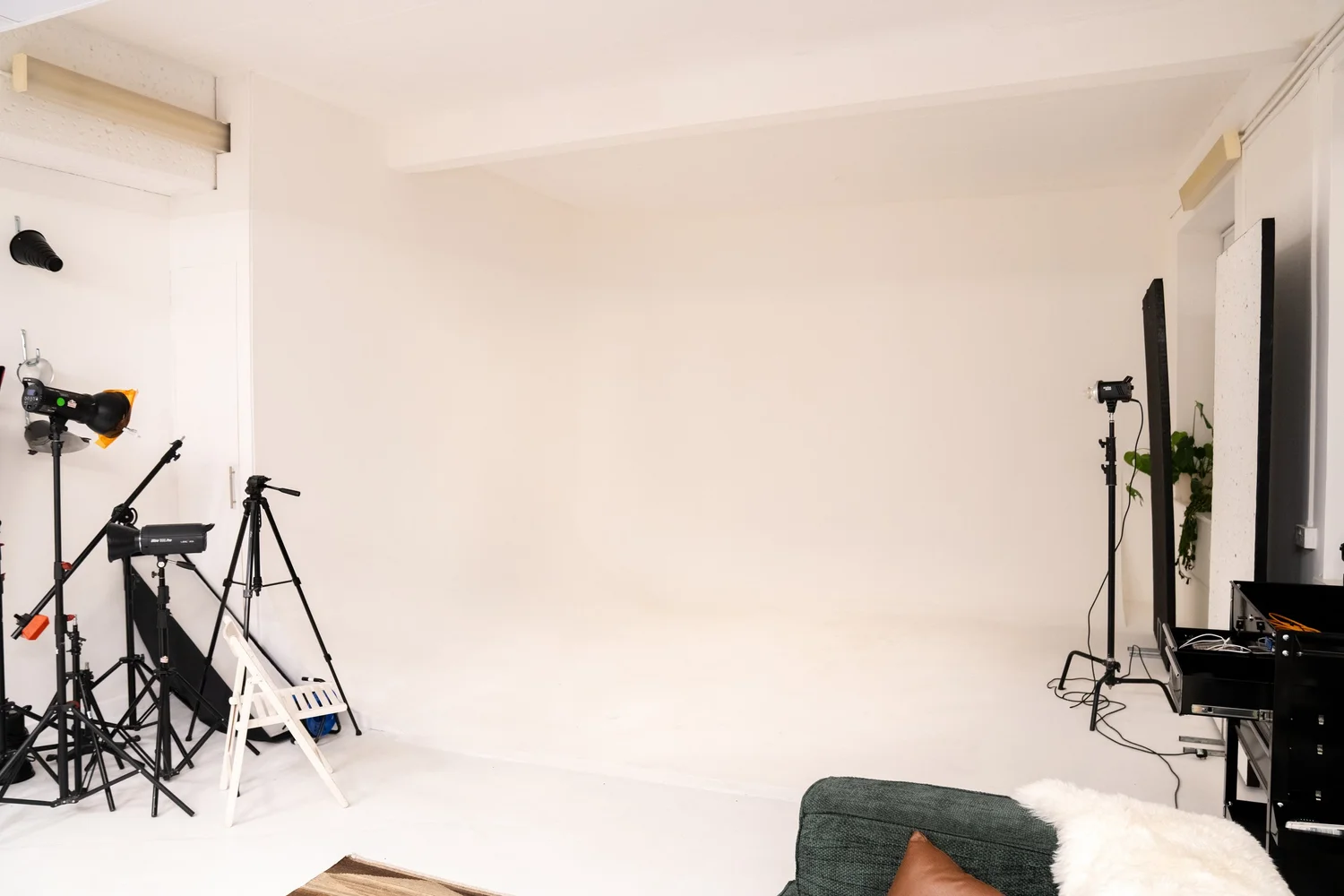
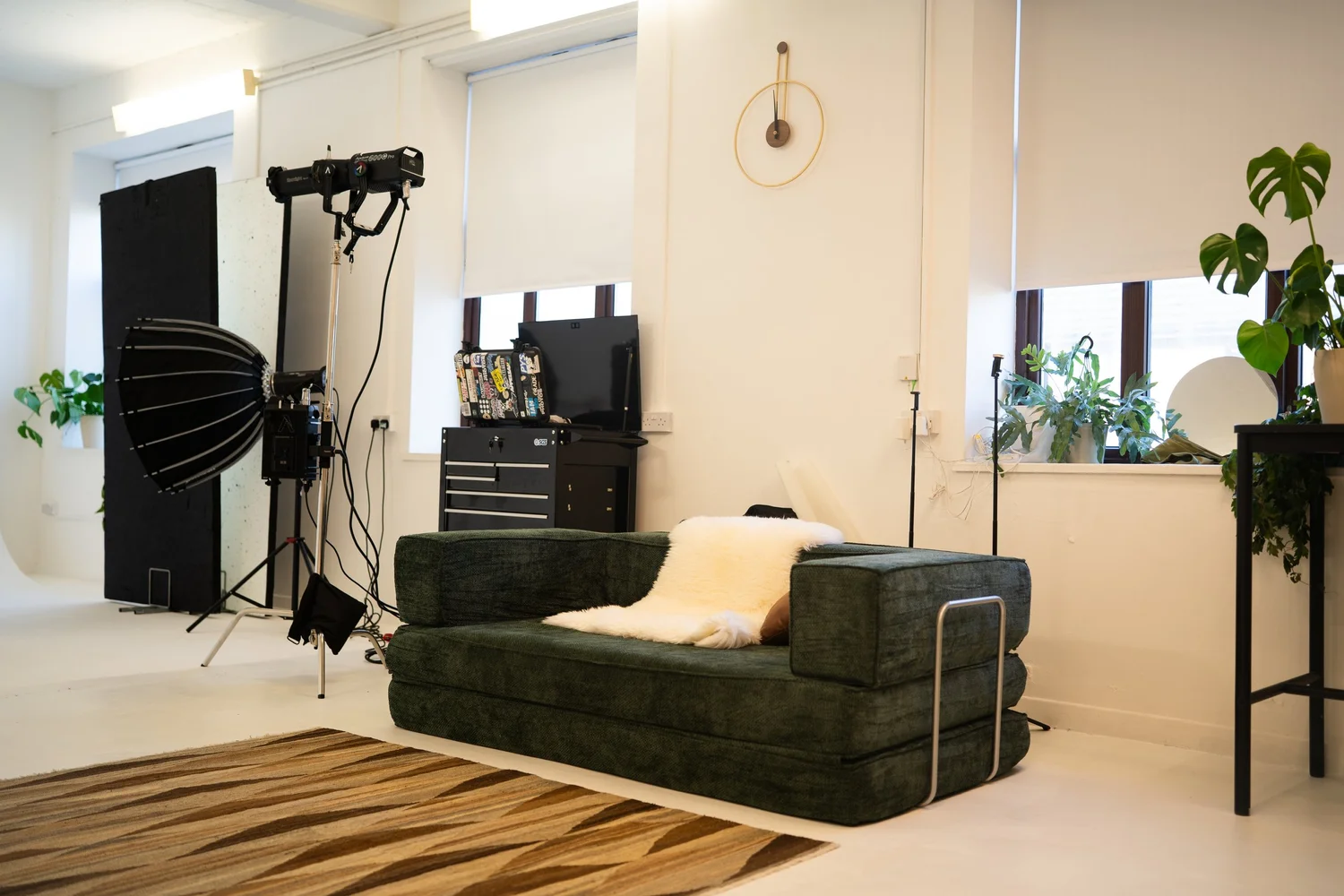
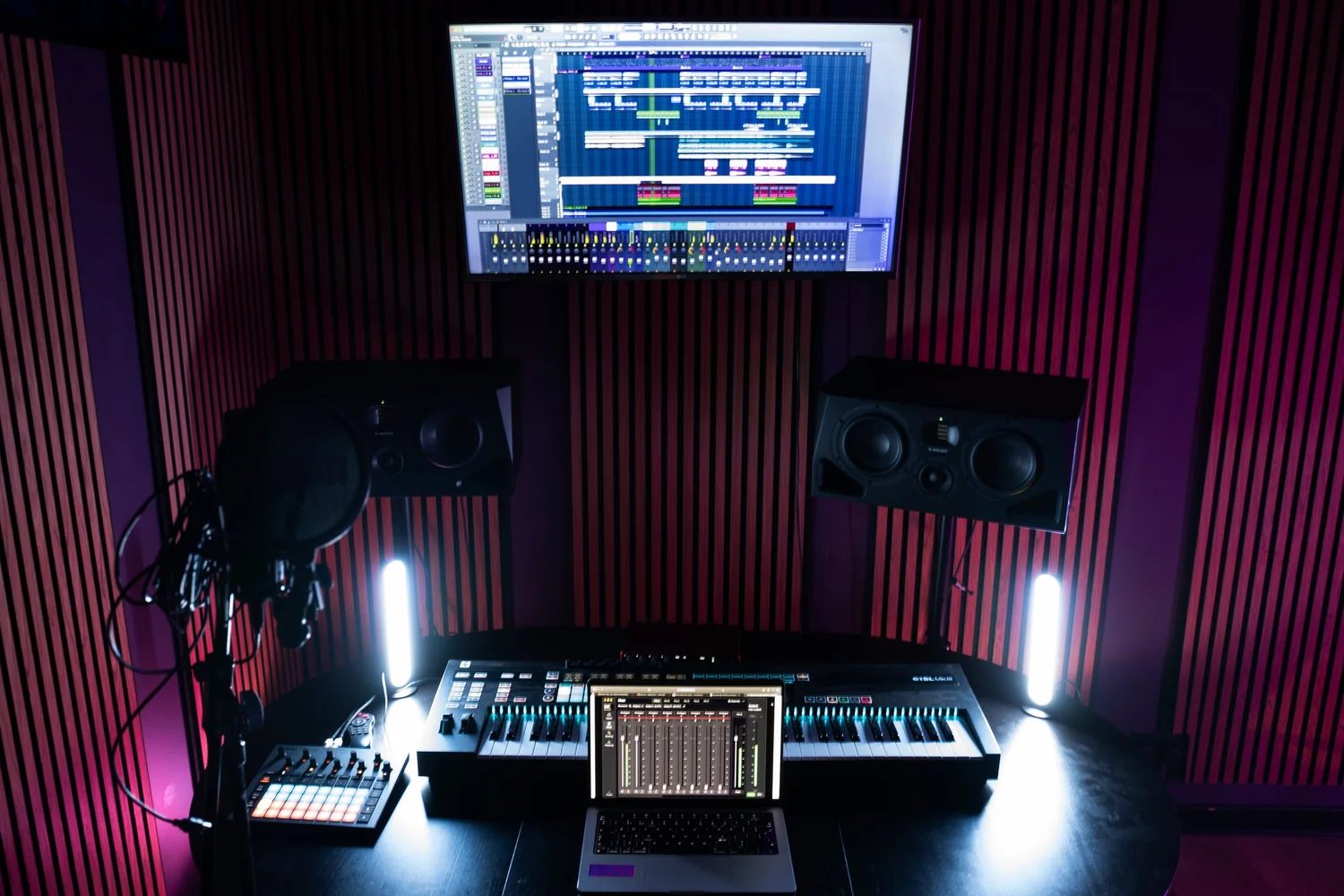
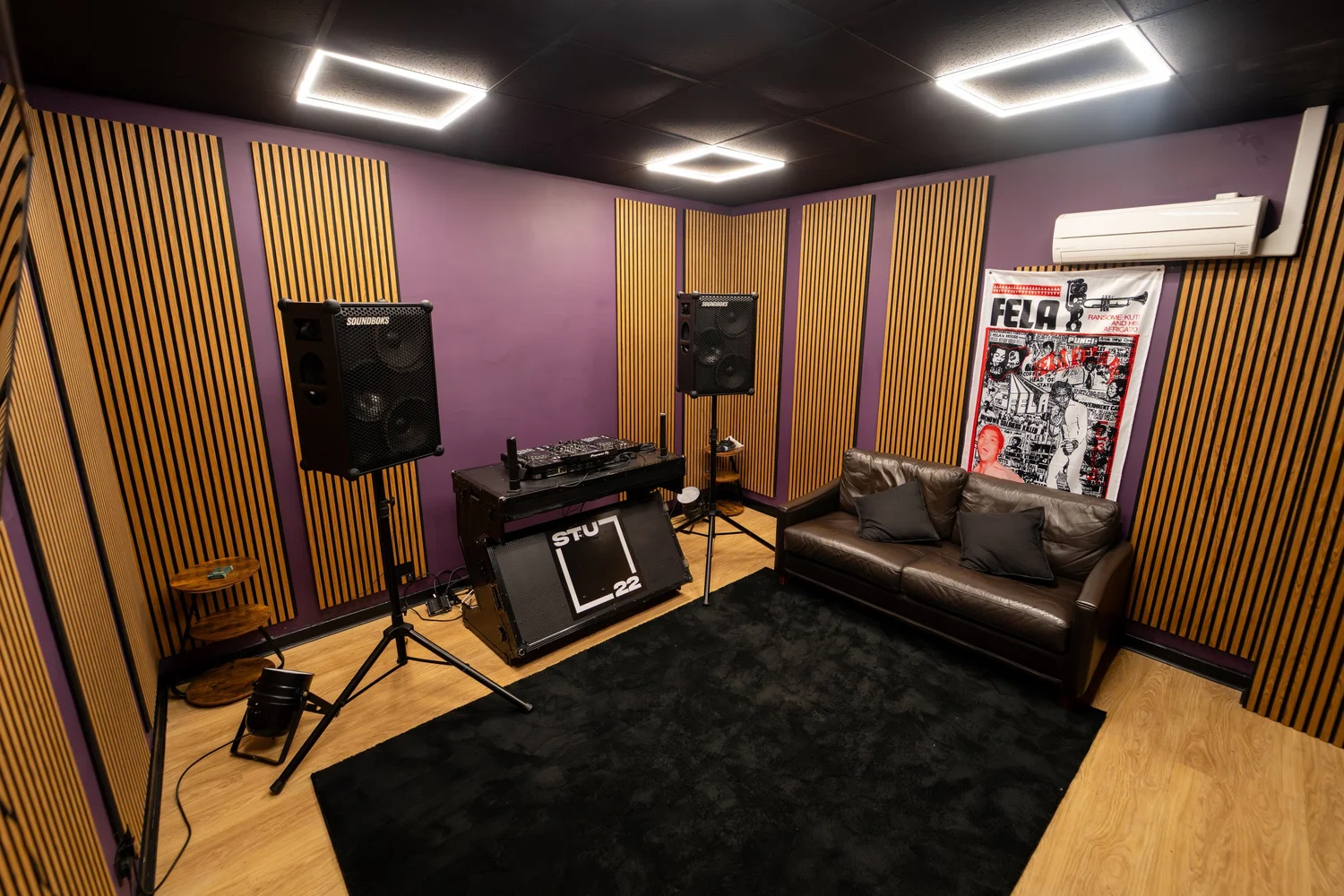
It is three rooms, so the party moves. The Cove is a 16ft white cyclorama that can be lit any colour or branded with your logo, and it is the room everyone photographs themselves in. The Blackout is fully blacked out, low light and red velvet, and it is where the evening settles once the speeches are done. The Portal holds the DJ setup and the sound system, and it is a proper dance floor rather than a cleared corner. Open all three for 135 people, or use one or two for a team of forty and the space still feels full.
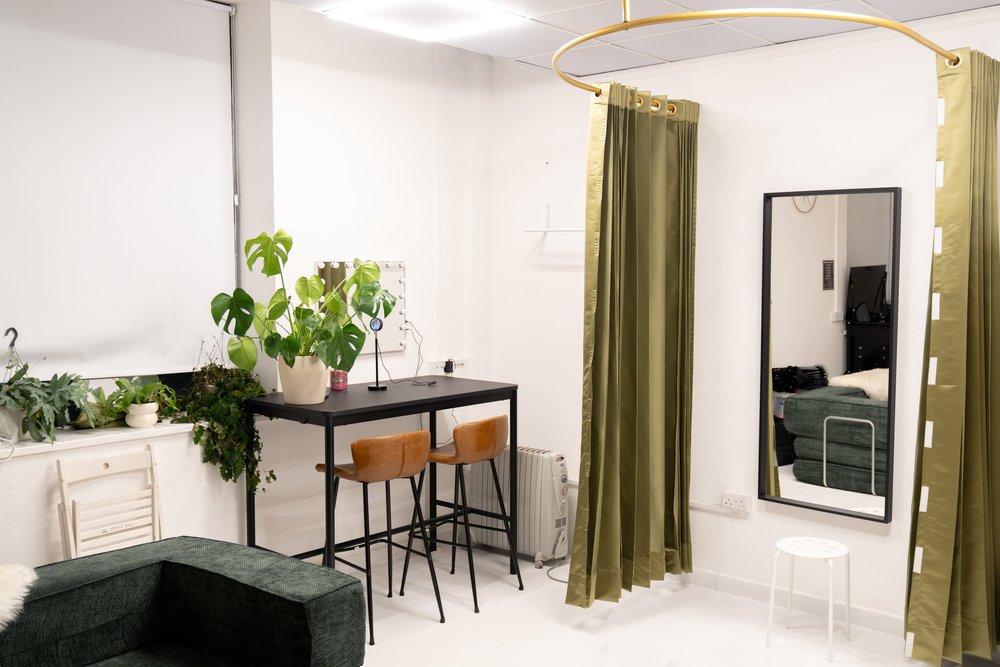
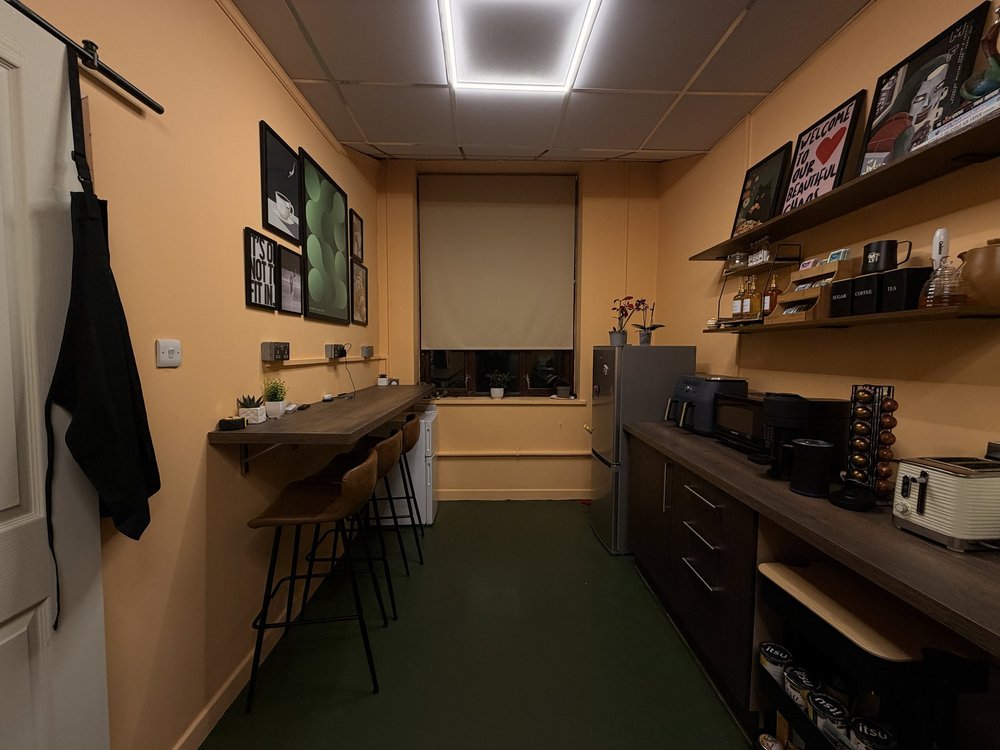
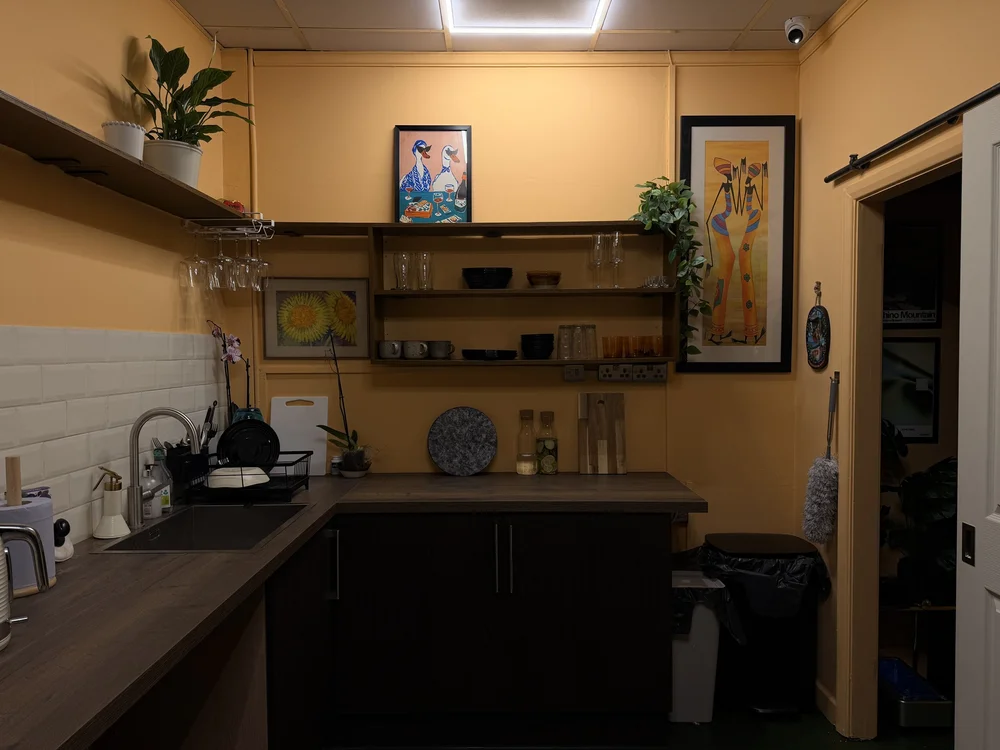
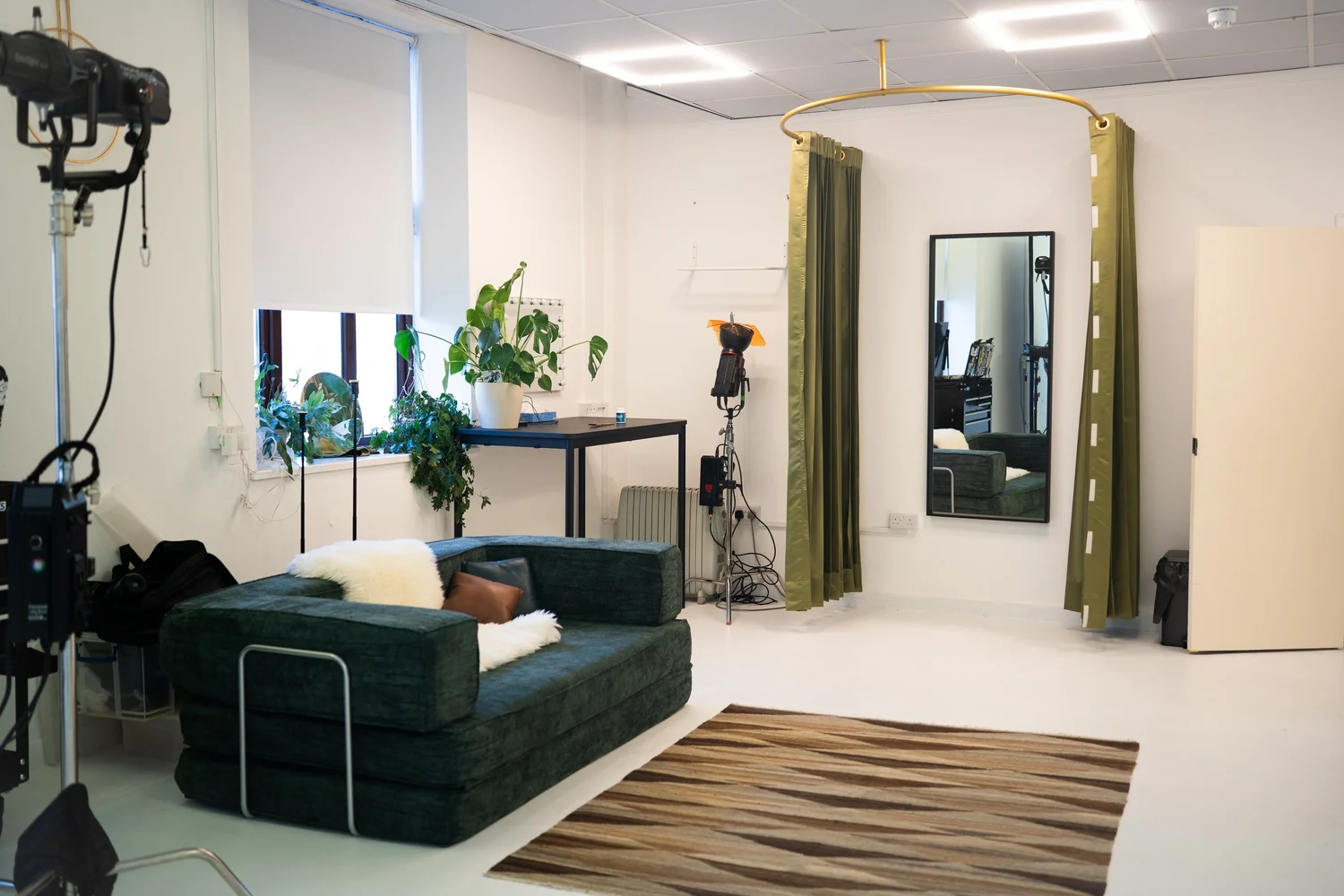
The hire fee includes the staffed bar, a sound system across the venue, the full DJ setup, professional studio lighting, a Leica Cine projector for visuals and branding, festive styling put up and taken down by us, a photographer on the night with edited images delivered afterwards, a studio host on site throughout, and kitchen access plus a private changing room. Catering and security are brought in by you or arranged on request.
At 135 guests that is £25.93 + VAT per head, or £31.11 inc VAT — and if you want to see how that compares with the rest of the London market, we have written up what a Christmas party actually costs per head in London, including the HMRC rule that should set your ceiling before you look at a single venue.
Outside December, the same building is available for event space hire in East London at £350 per hour ex VAT with a five-hour minimum.
Frequently asked questions
Are there Christmas party venues in London with no curfew?
Yes, but they are a minority. Venues without a building curfew tend to be in commercial buildings away from housing, and they are concentrated in East London areas like Wapping, Hackney Wick and Fish Island. STU 22 in Wapping has no building curfew, so a Christmas party can run late into the night, with the finish time confirmed in writing when you book.
What time do most London Christmas party venues finish?
Most small and mid-sized London venues have a hard finish between 23:00 and midnight, and some stop at 22:30. Music usually has to stop thirty to sixty minutes before guests have to be out of the building. Hotel function rooms and venues on residential streets tend to have the earliest finishes.
What is the difference between a late licence and no curfew?
A late licence governs how late a venue can legally sell alcohol and play amplified music, and is granted by the council. A curfew is the time everybody has to be out of the building, which is set by the licence, the lease or the landlord, whichever is strictest. A venue can hold a late licence and still have to clear the building early, so you need to ask about both separately.
What questions should I ask a venue about its curfew?
Three: what time does the music have to stop and what time do we have to be out of the building; until what time can you serve alcohol and is that under your own licence or a Temporary Event Notice; and is the late finish confirmed in writing at the point of booking with any overtime charge stated. If there is an overtime rate, there is a curfew — it has just been priced.
Why do so many East London venues have a curfew?
Three reasons. Much of East London's warehouse stock is now surrounded by housing, so licensing conditions are tighter and often include noise limiters. The premises licence fixes the hours legally, so a venue cannot extend them on request. And separately from licensing, many venues sit in buildings with shared entrances, other tenants or a managing agent that locks up at a set time.
Can a venue extend its licence for one night for our Christmas party?
Sometimes, via a Temporary Event Notice, but it needs roughly ten working days' notice, is capped at 499 people, can be objected to by police or environmental health, and each premises is limited in how many it can use per year. In December those notices are in heavy demand. A venue with its own licence and no curfew removes the risk entirely.
Is STU 22 licensed to serve alcohol?
Yes. STU 22 holds its own alcohol licence, so alcohol can be served and sold on site with no Temporary Event Notice and no waiting period. The bar is staffed by STU 22 with its own staff, glassware and ice, and can be run as a cash bar, a capped card tab or a per-head drinks package. Clients who prefer to bring their own drinks can do so with no corkage.
How late can a Christmas party run at STU 22?
There is no building curfew, so the party is not cut off by the venue. Late finishes and licensed drinks service hours are confirmed at the point of booking, so you know exactly where you stand before the invitations go out rather than discovering it in the contract.
How many guests can a no-curfew venue in East London hold?
It varies widely, from around 50 in a railway arch to several hundred in a large warehouse. STU 22 holds up to 135 guests standing across three connected rooms, and because it is three rooms rather than one hall it also works for smaller parties of forty to eighty without the space feeling empty.
Ask us the three questions
Send us your date and a rough headcount on WhatsApp — +44 7871 170152 — and we will tell you the same day whether it is free. Ask us the three questions above while you are at it. You will get all three answers in writing, which is the only standard worth accepting from any venue in December.
STU 22, 8–10 Sampson Street, Wapping, London E1W 1NA. Licensed venue. Up to 135 guests. No curfew.