
Album Cover Photoshoot in London
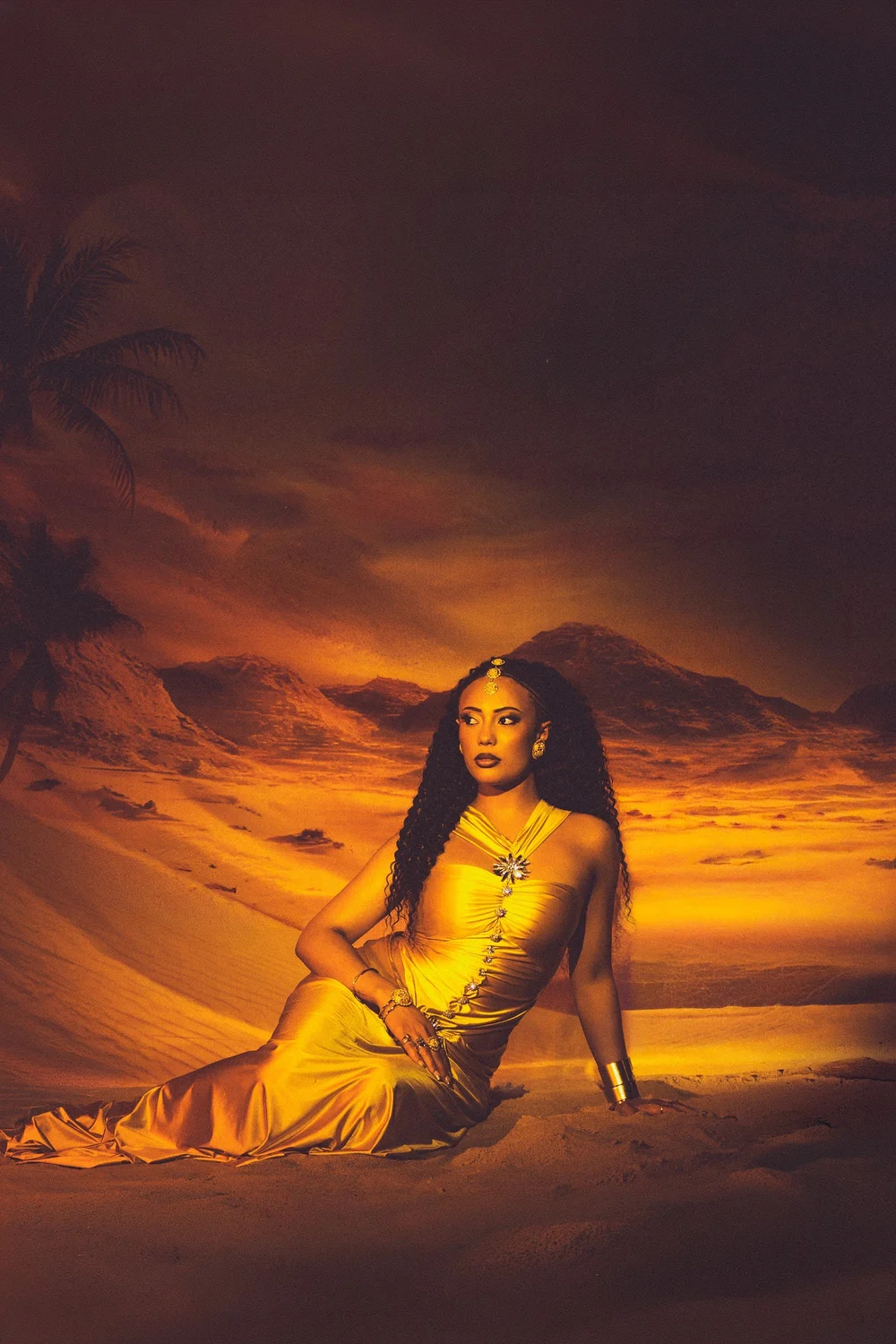
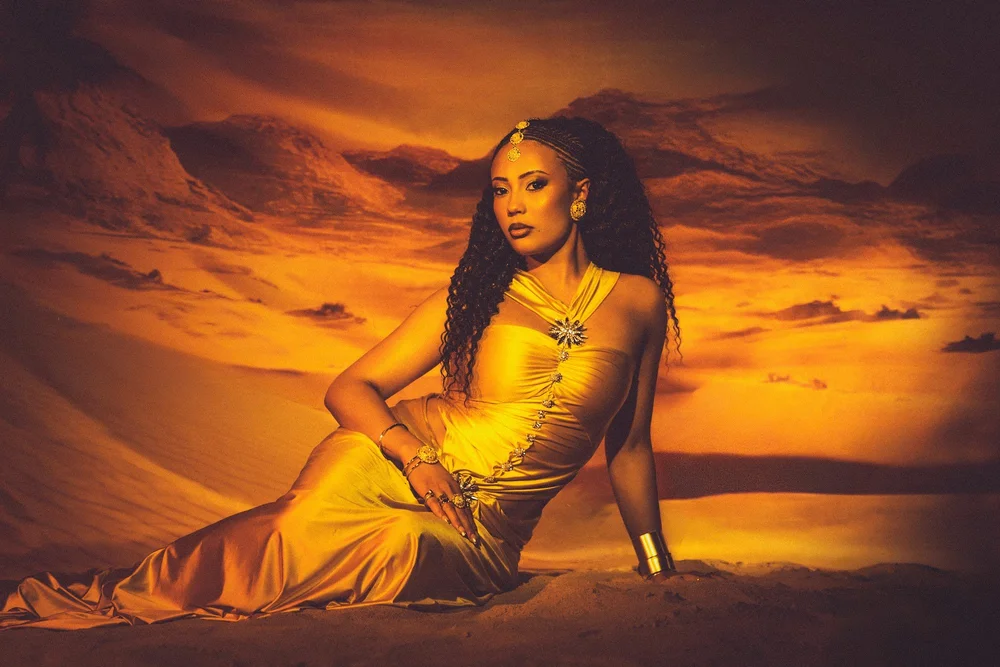
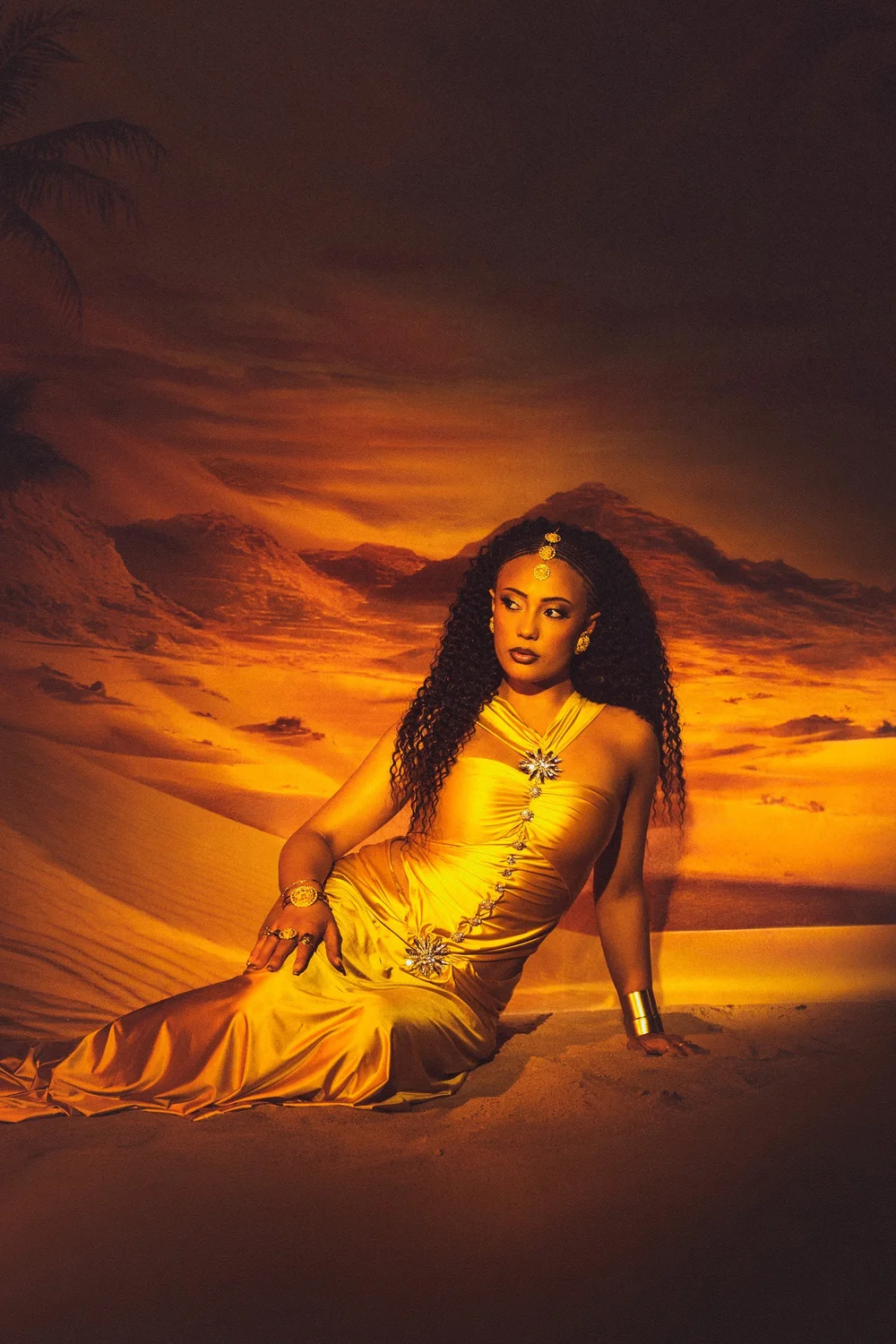
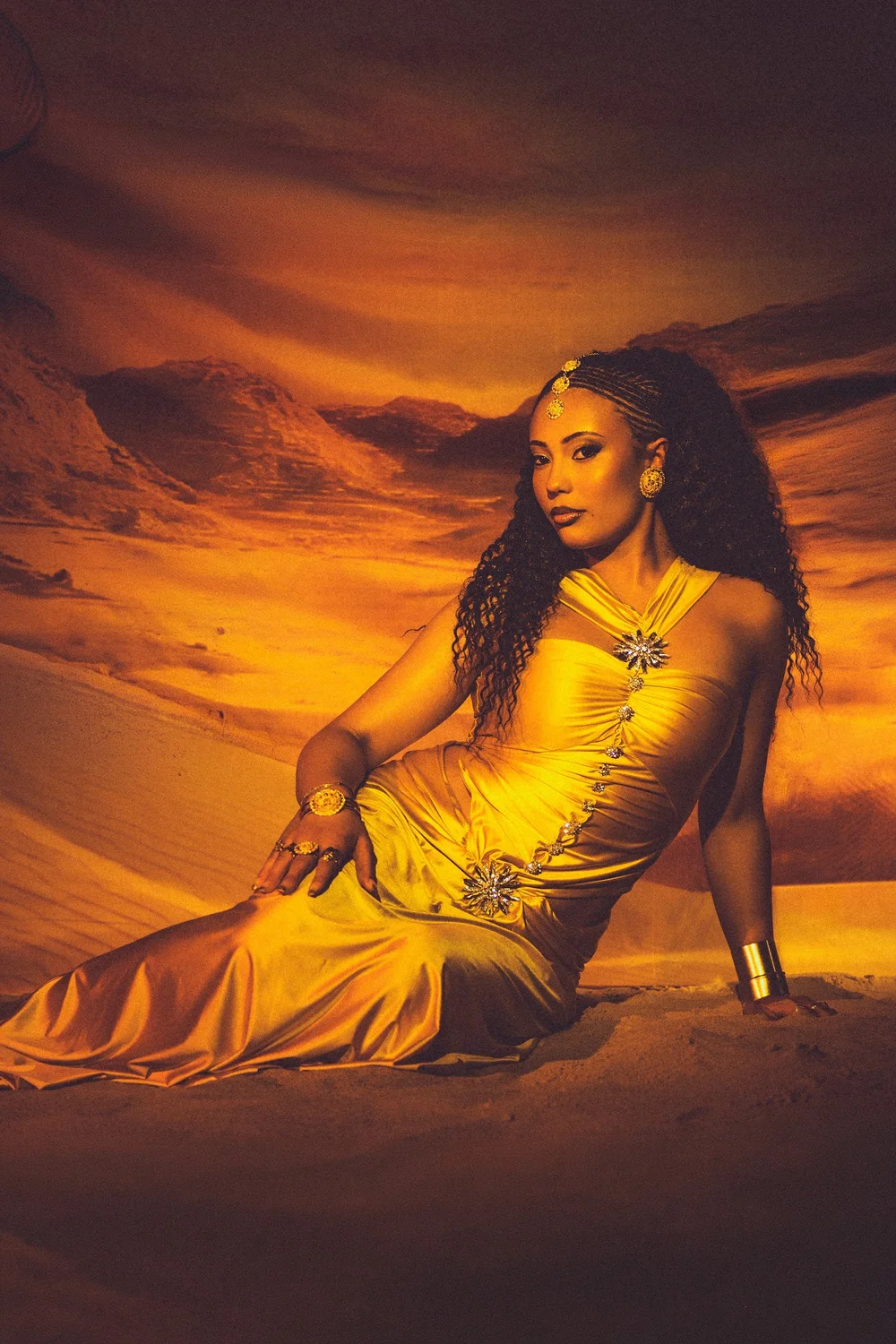
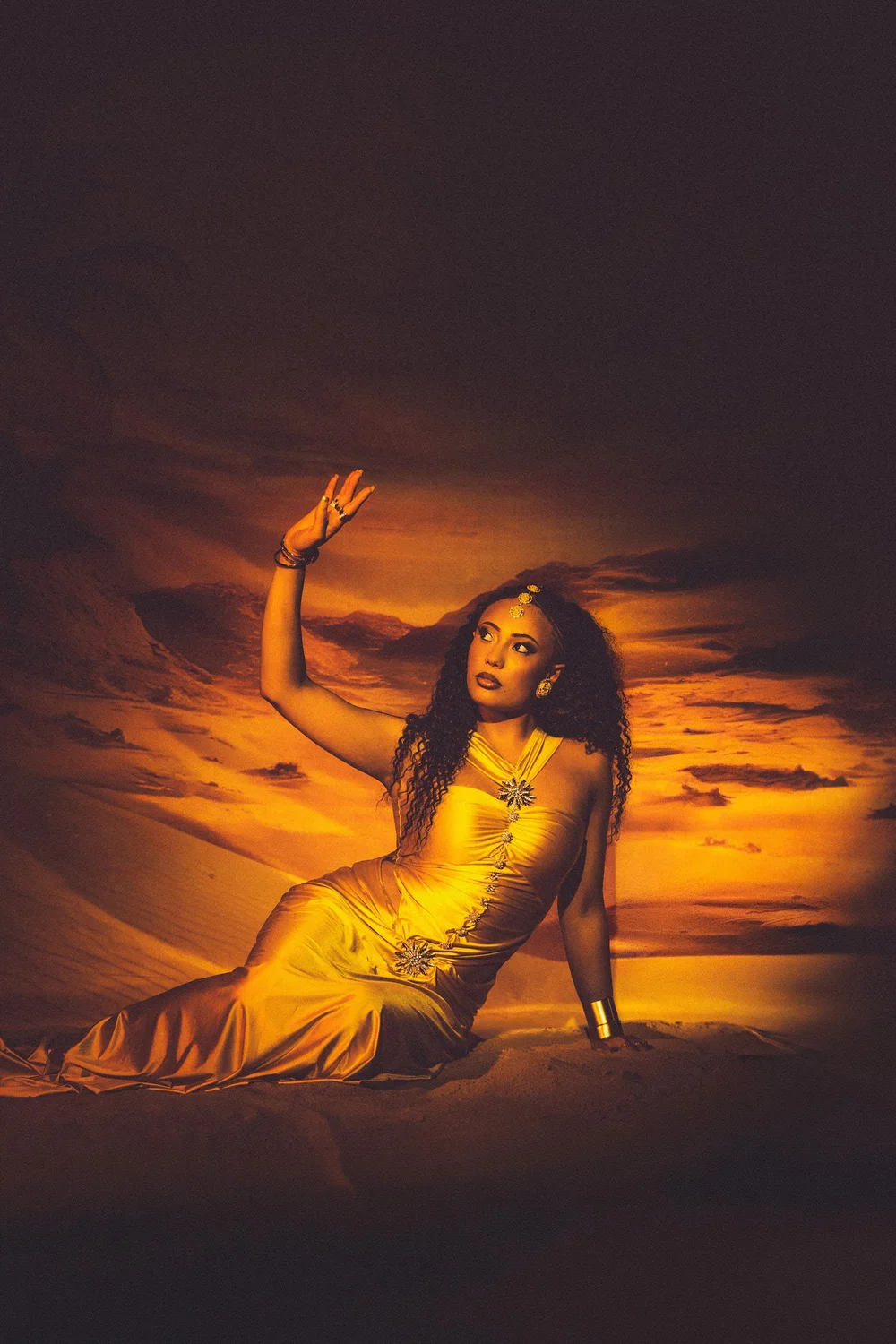
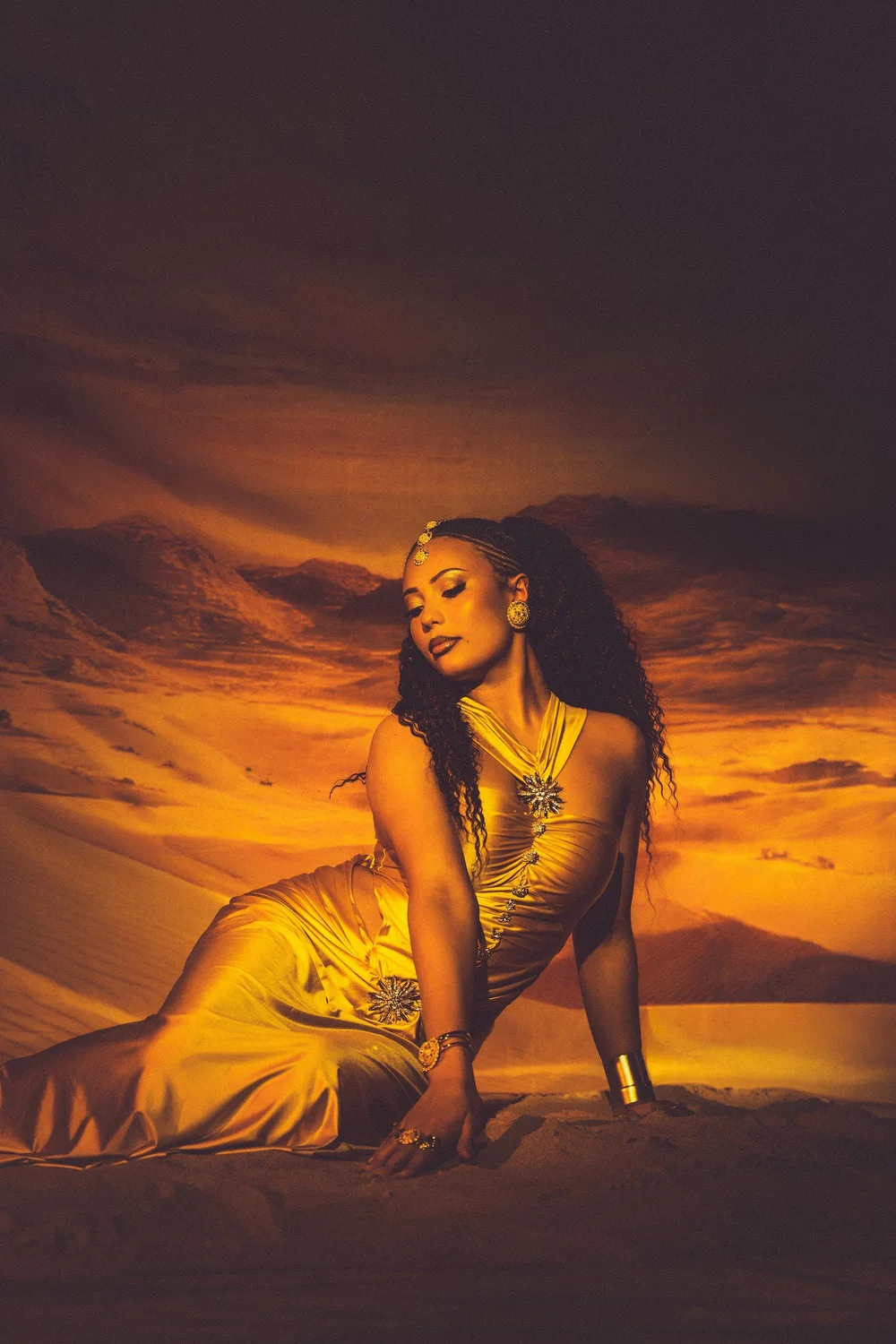
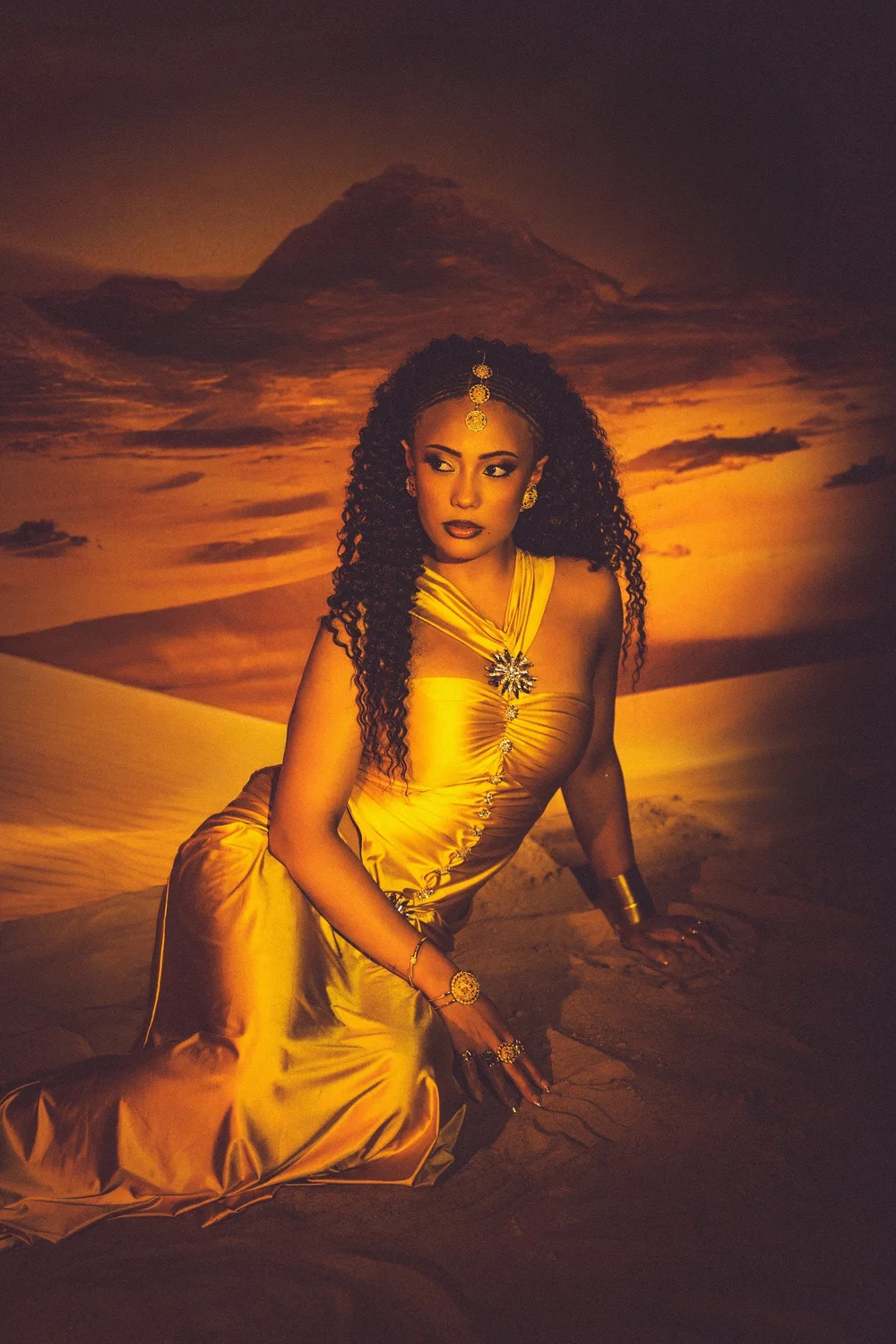
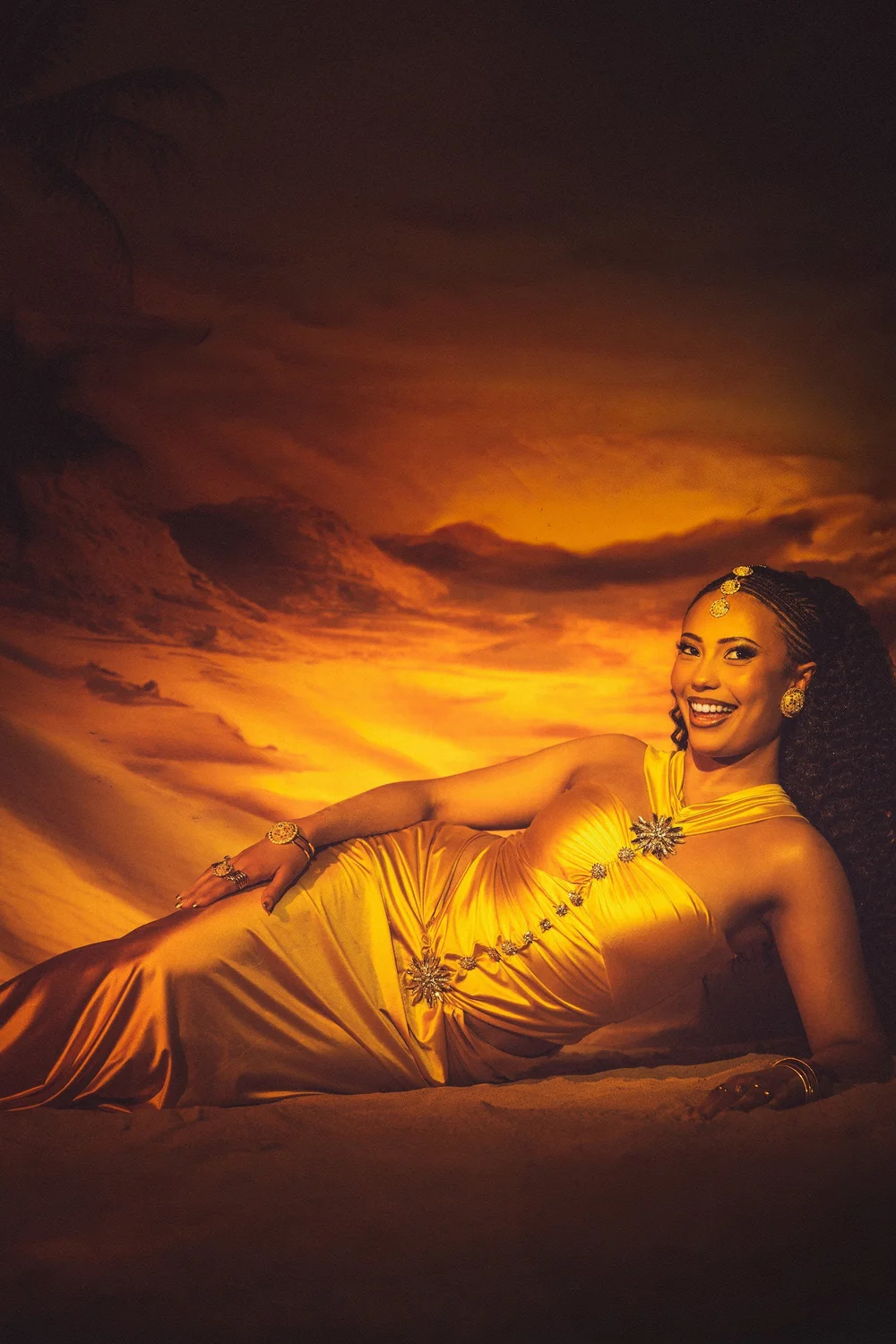
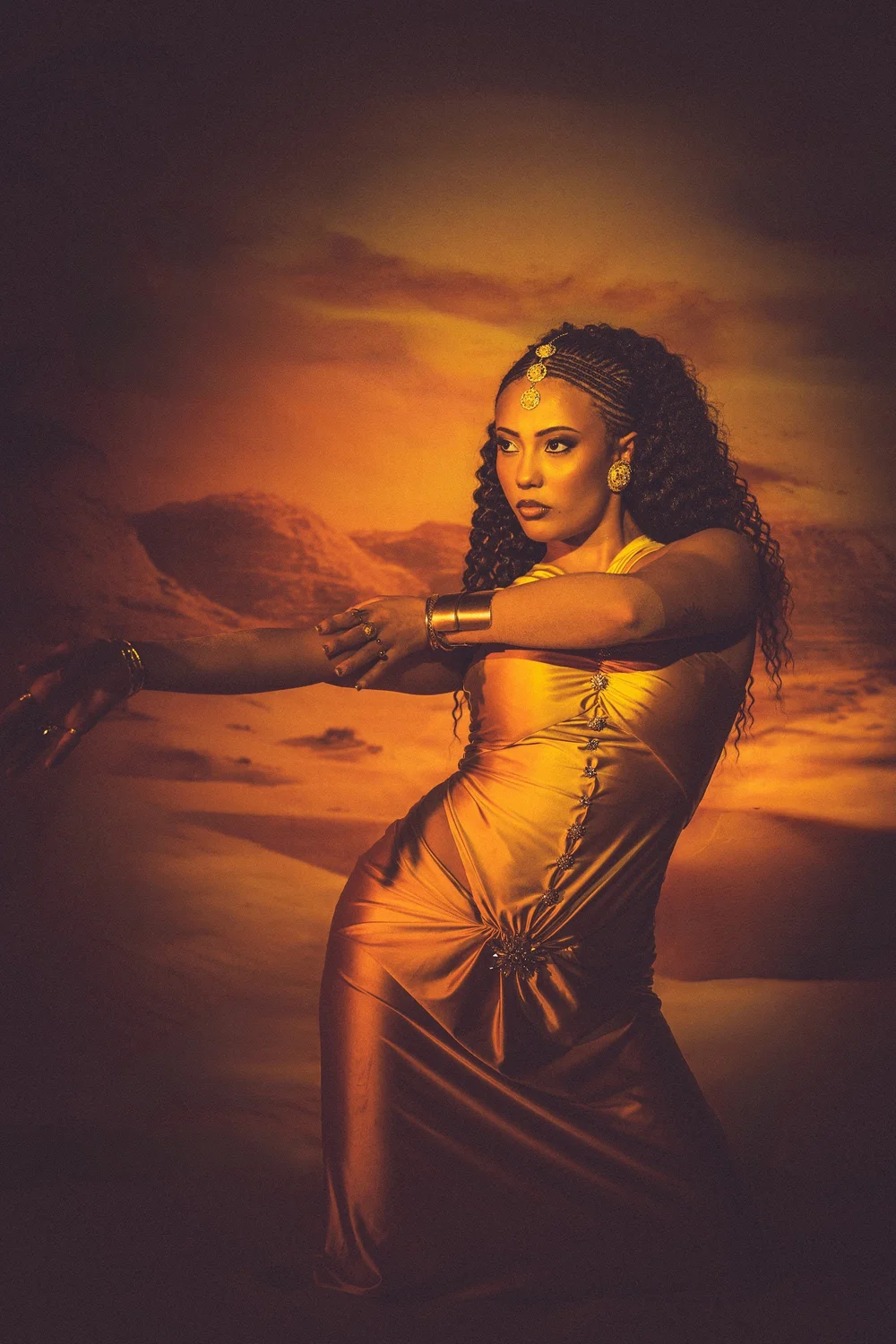
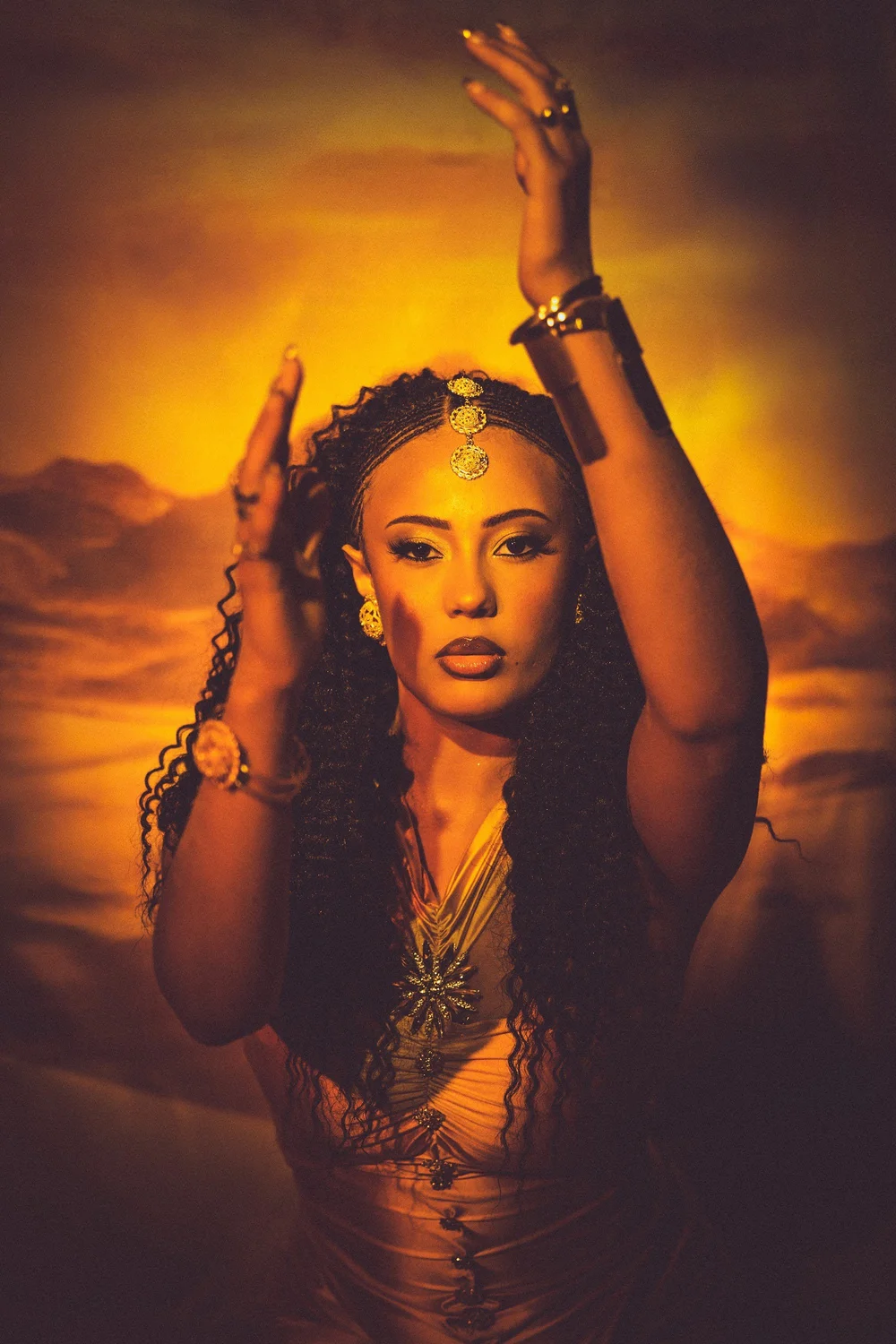
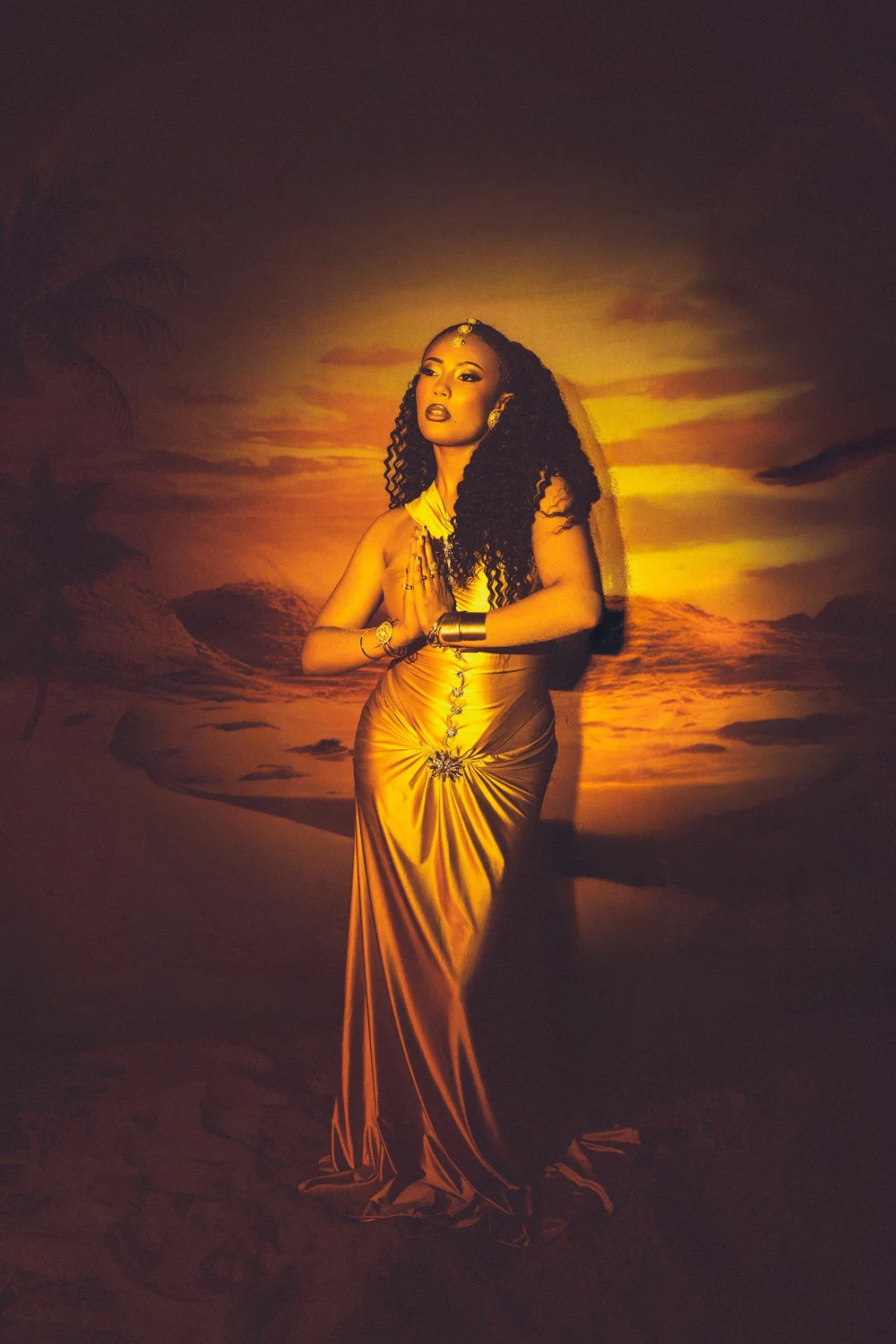
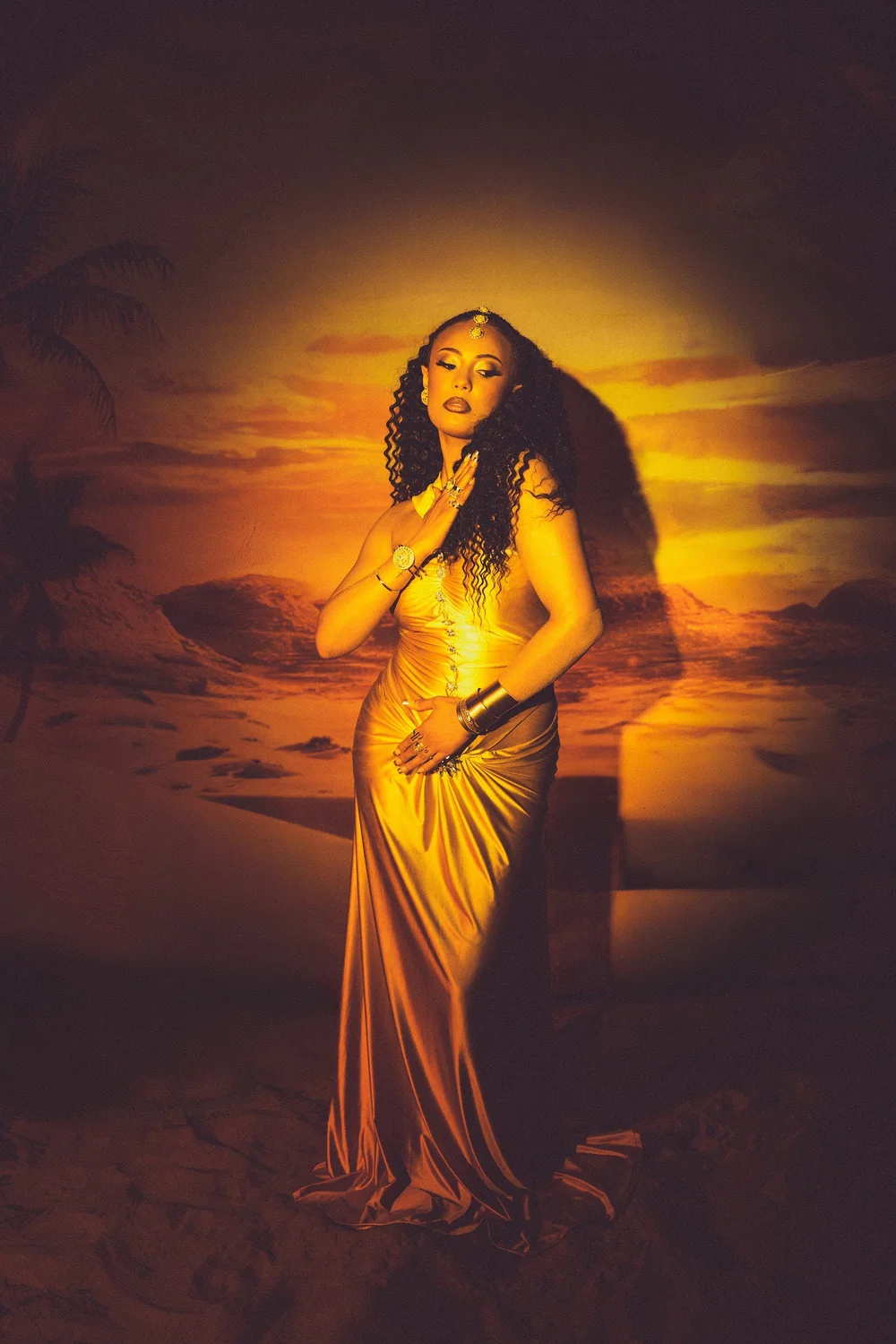
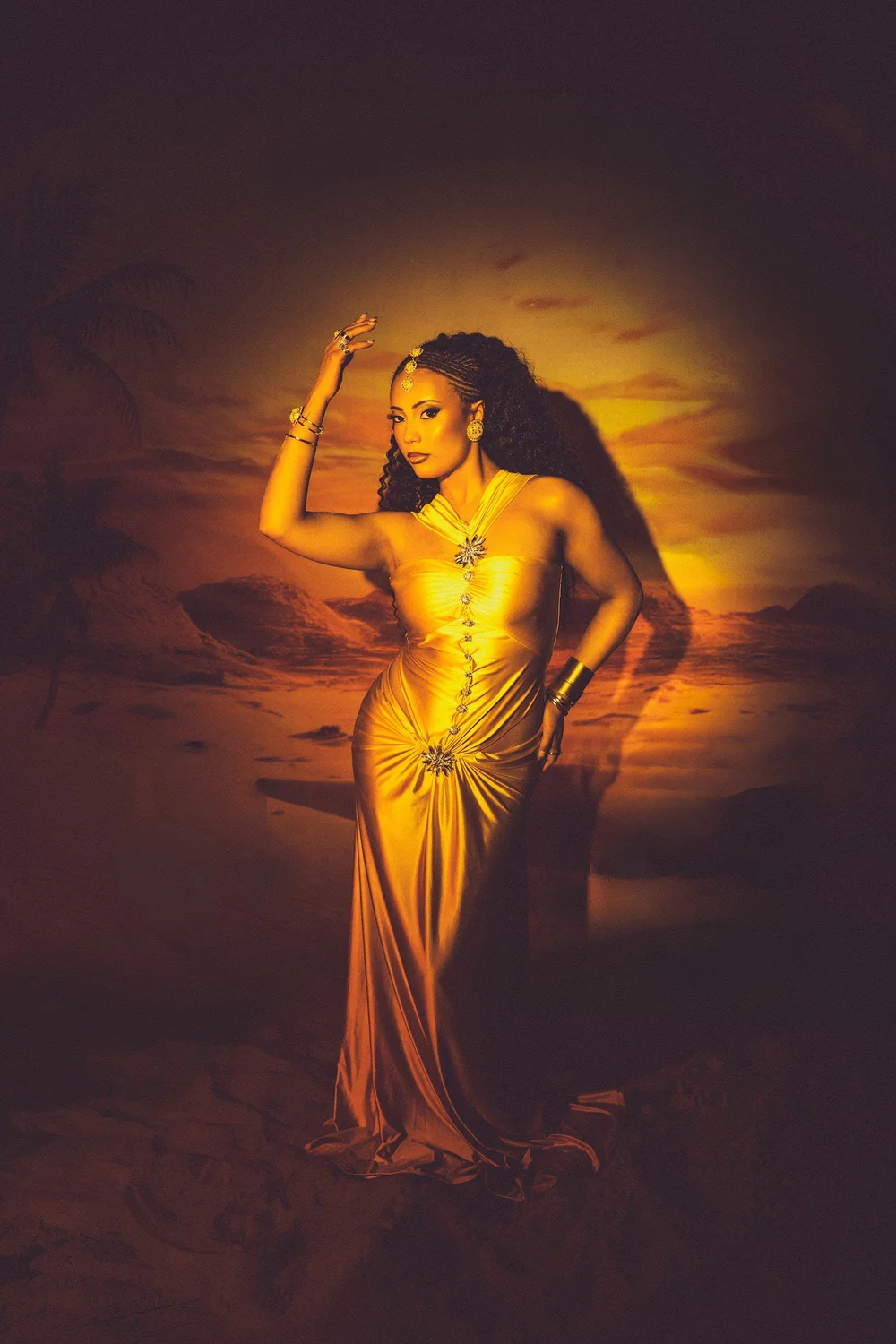
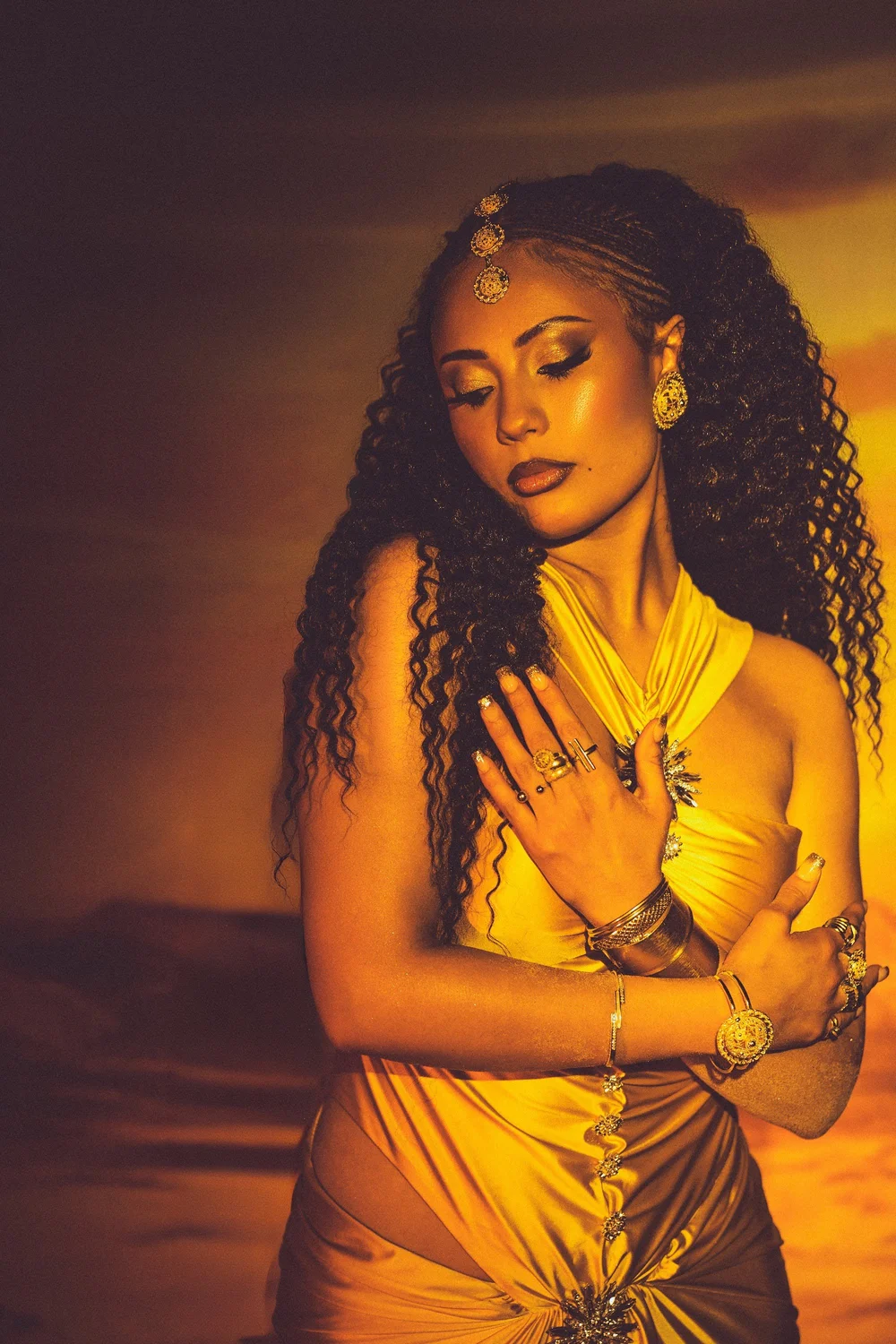
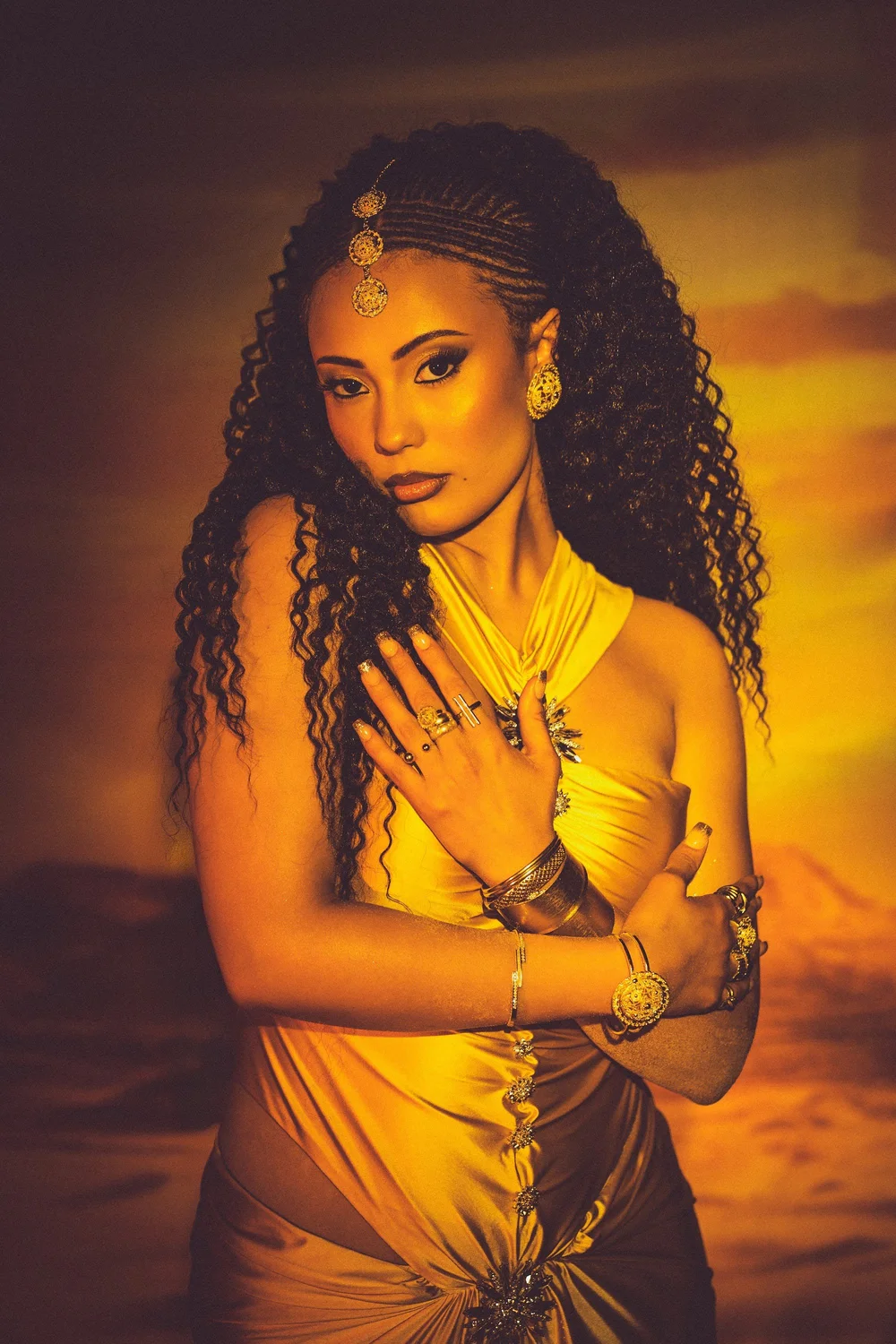
A full desert set, built from scratch on our studio floor, lit and shot in a single day — and the artist walked out with a finished album cover, a press set and three months of social content. Here is exactly how it was made, and what it would cost you to do the same at STU 22.
Hourly hire from £35 + VAT · 5.0 stars from 67 Google reviews · 10 minutes from Shoreditch
The brief: one shoot, one cover, one world
Most artists book a studio and hope a cover appears. This one started the other way round. The artist arrived with a single reference — warm, endless, golden-hour desert — and a release date. Everything on the day was built backwards from the square crop that would sit on Spotify and Apple Music at 300 by 300 pixels.
That matters more than it sounds. An album cover has to survive being shrunk to the size of a postage stamp on a phone. Busy backgrounds disappear. Fine detail disappears. What survives is silhouette, one strong colour, and a face. So the set was built to give exactly that: a clean horizon line, a single amber key, and nothing else competing.
How the set was built
A real sand floor, not a backdrop
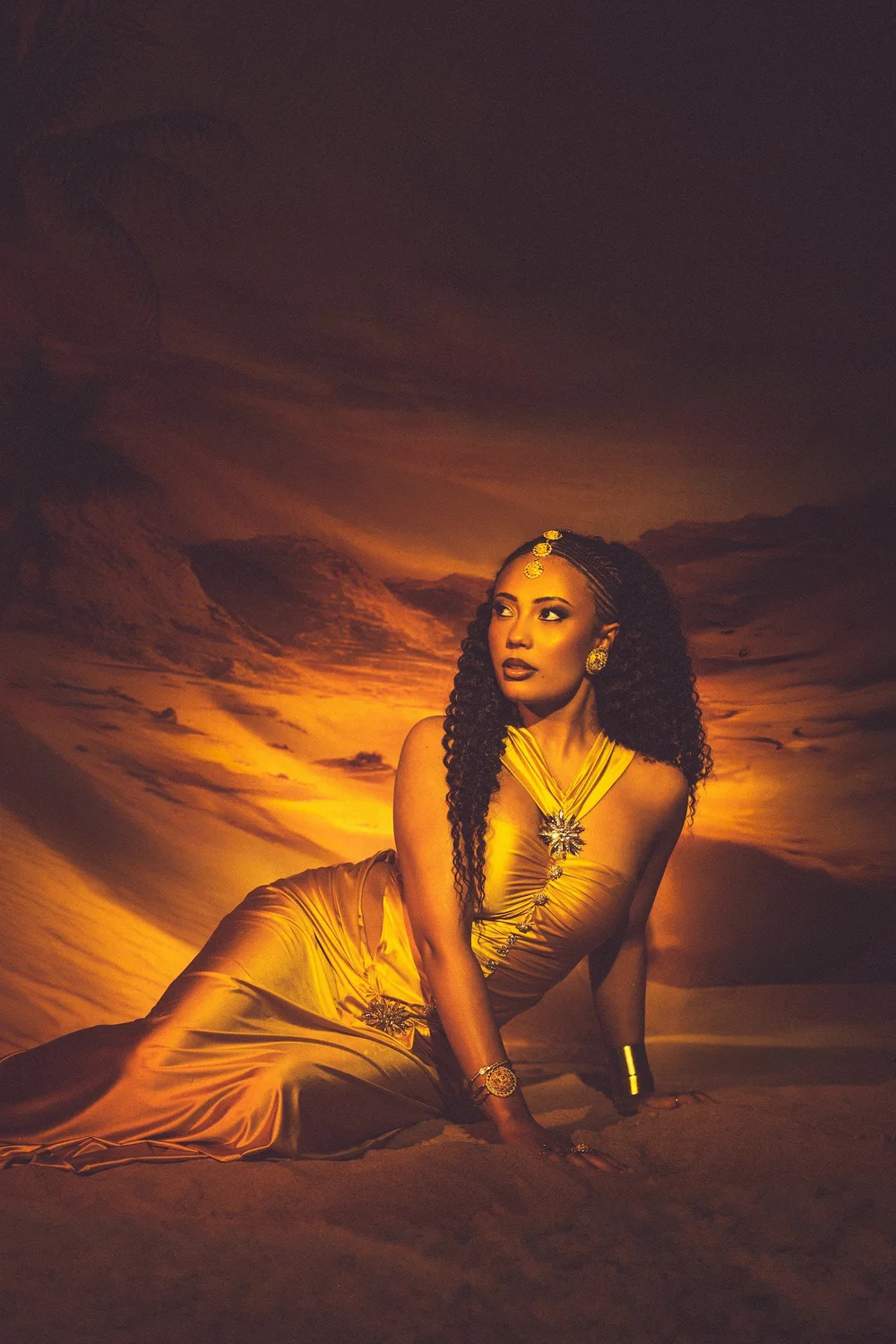
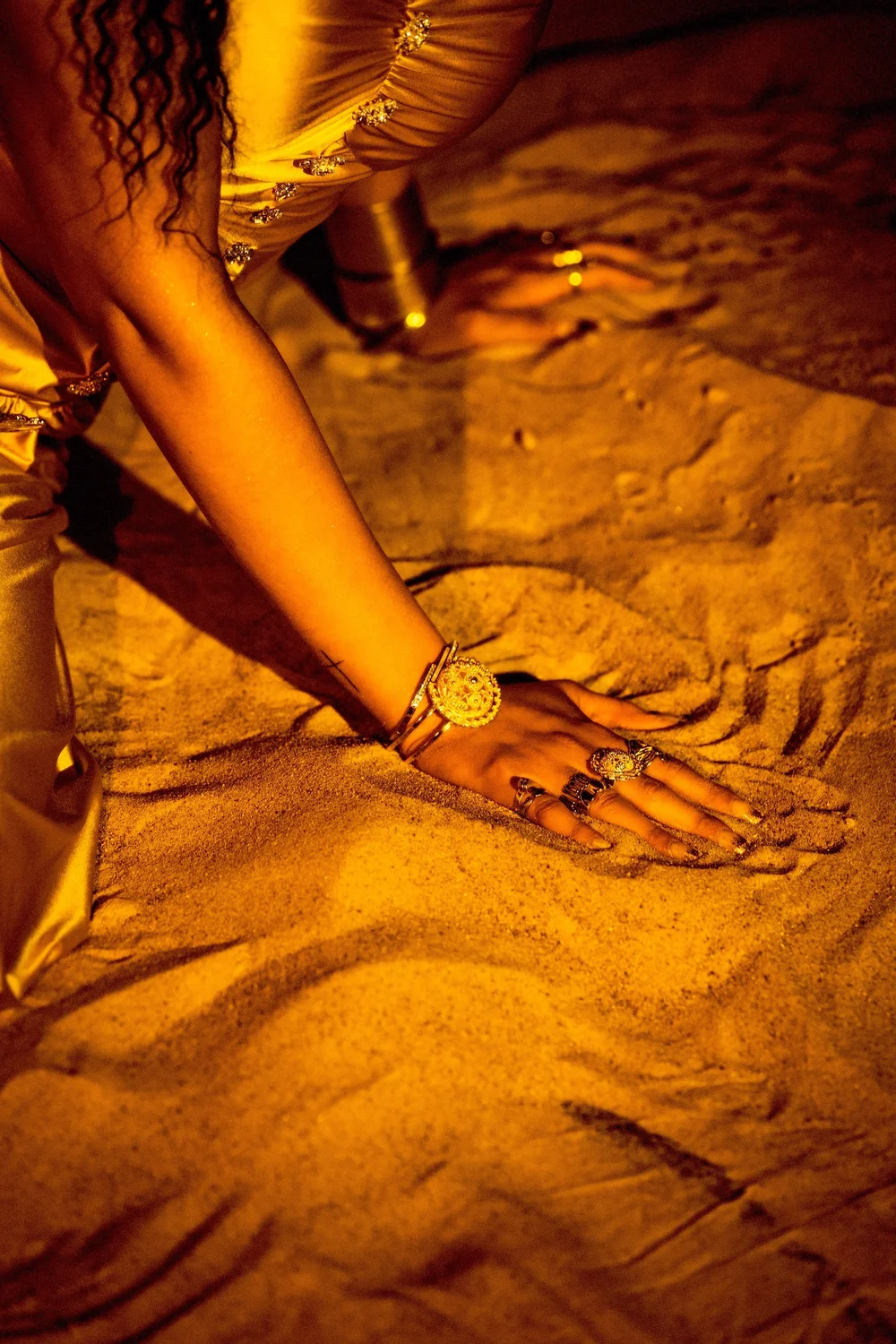
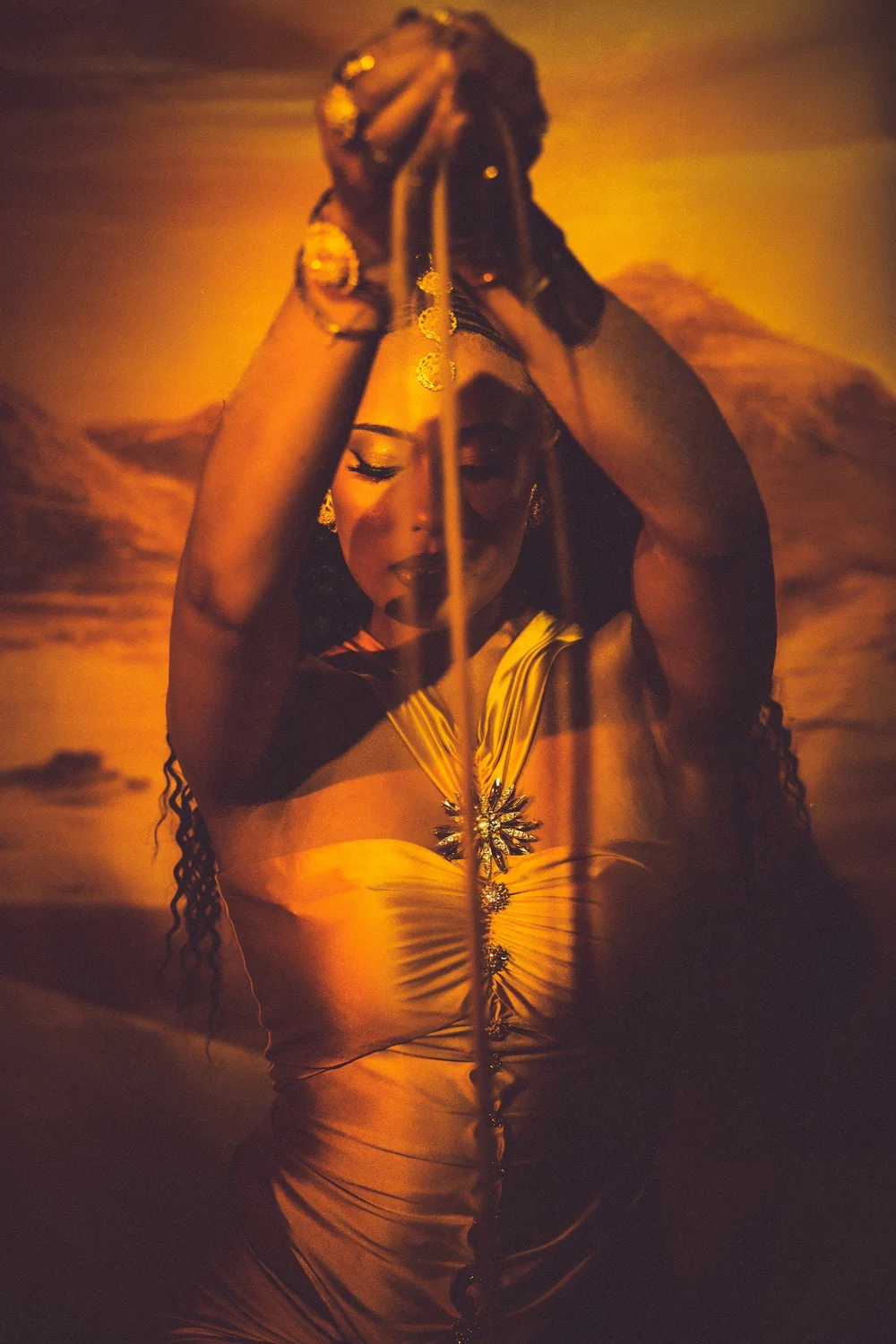
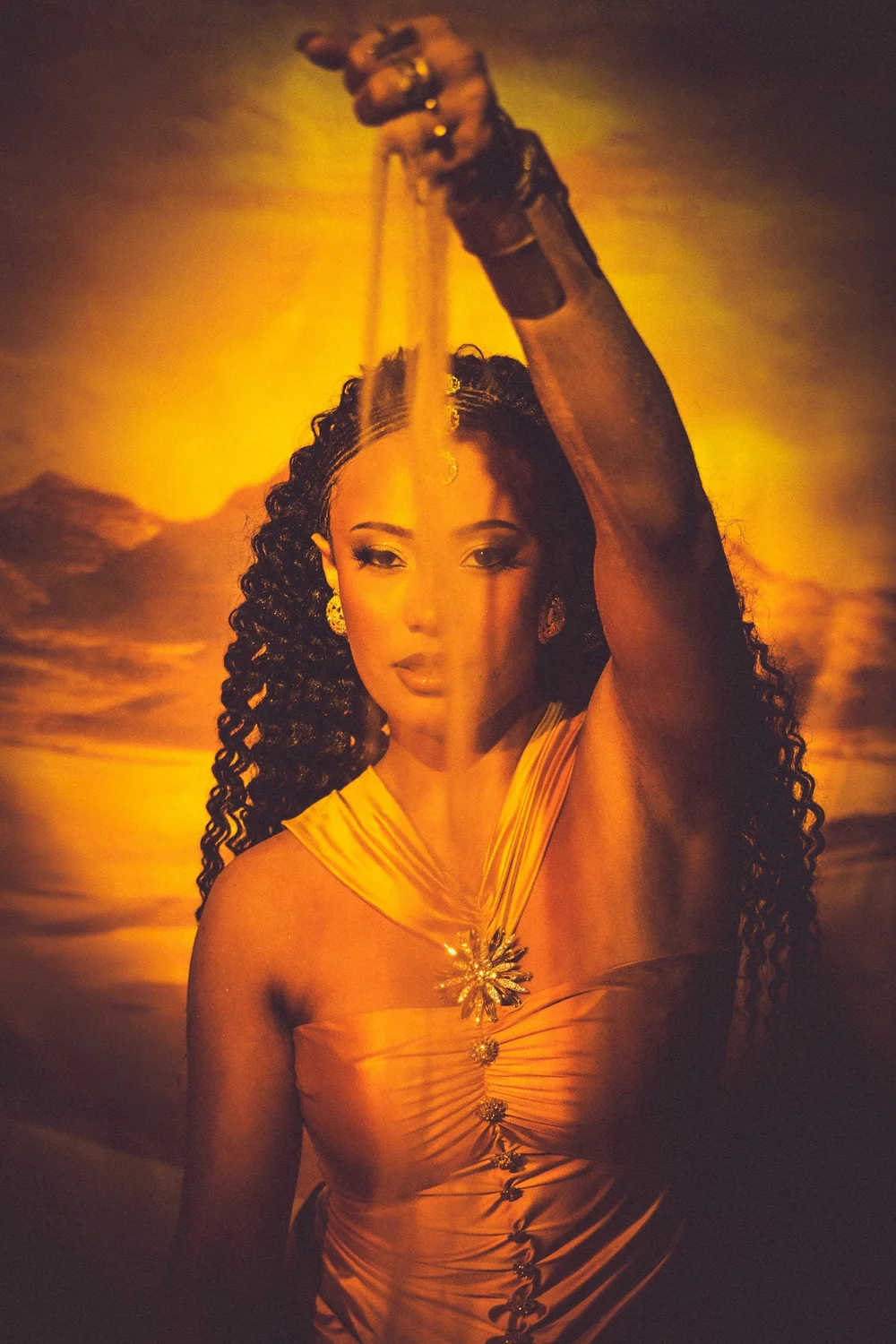
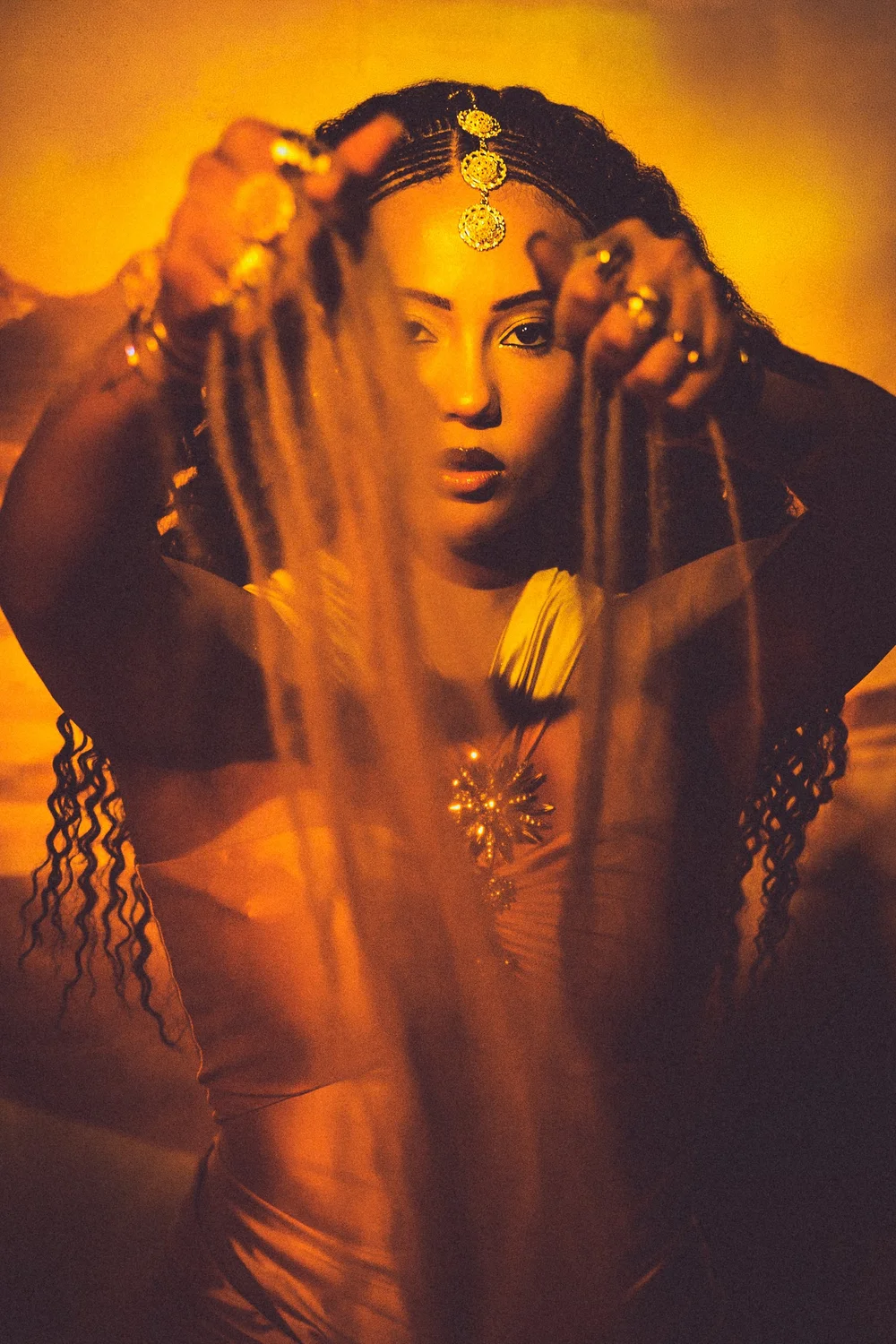
Printed desert backdrops read as fake the moment a foot touches them. We built the dunes physically on the studio floor so the artist could sit in the sand, lie back in it, and let it move. Contact with the set is what sells a cover image — it is the difference between a portrait of someone standing in front of a picture and a portrait of someone inside a place.
One light, doing the work of five
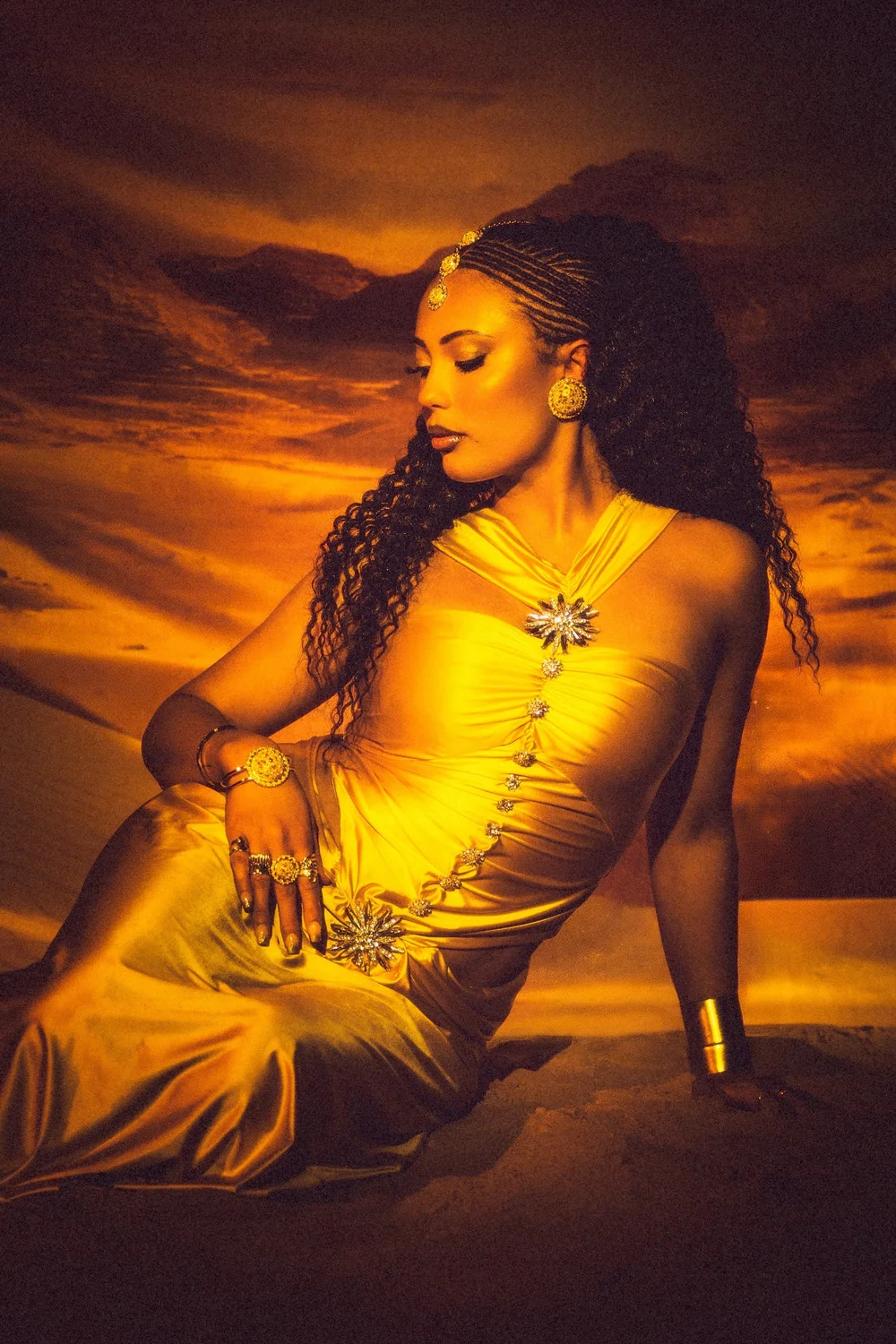
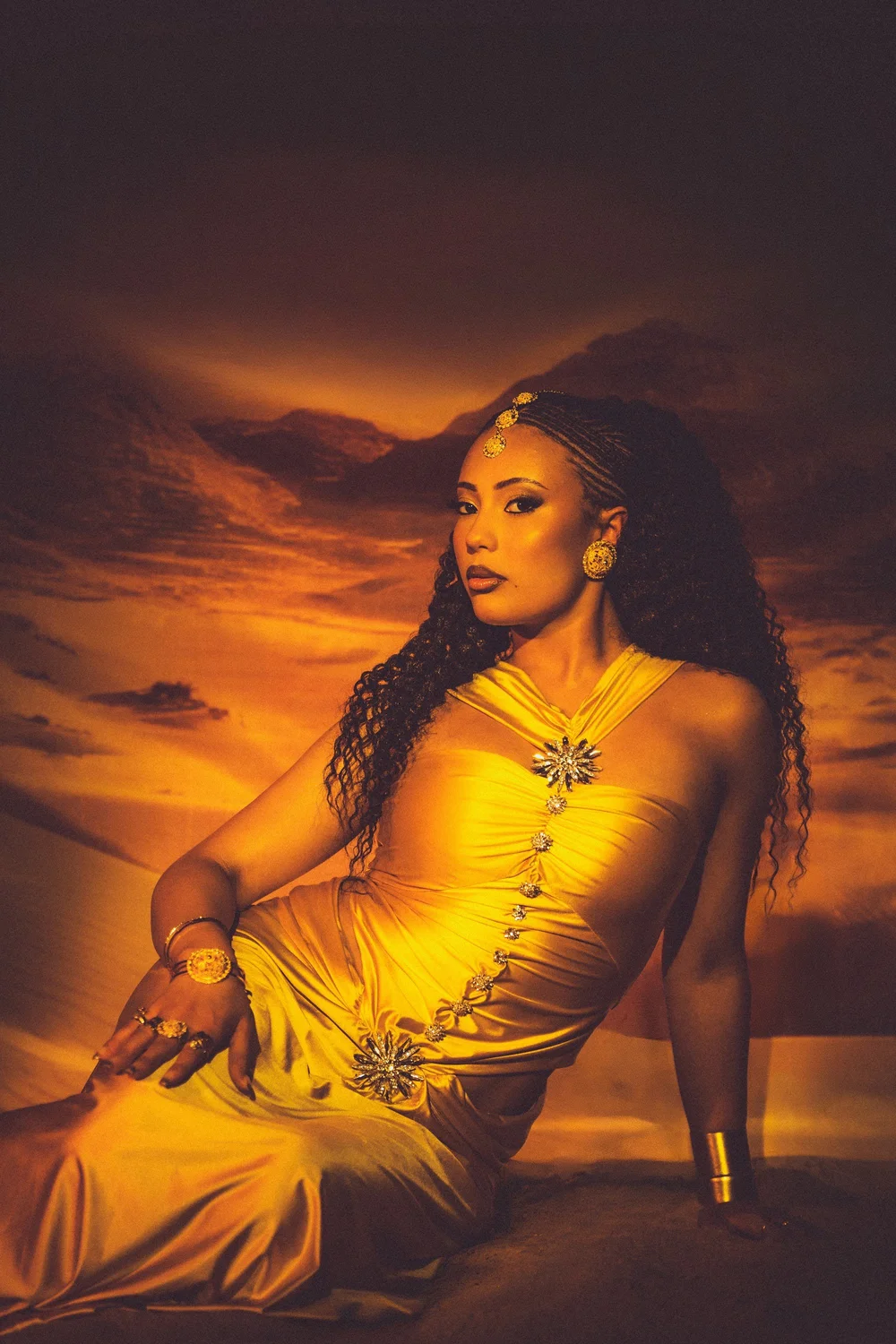
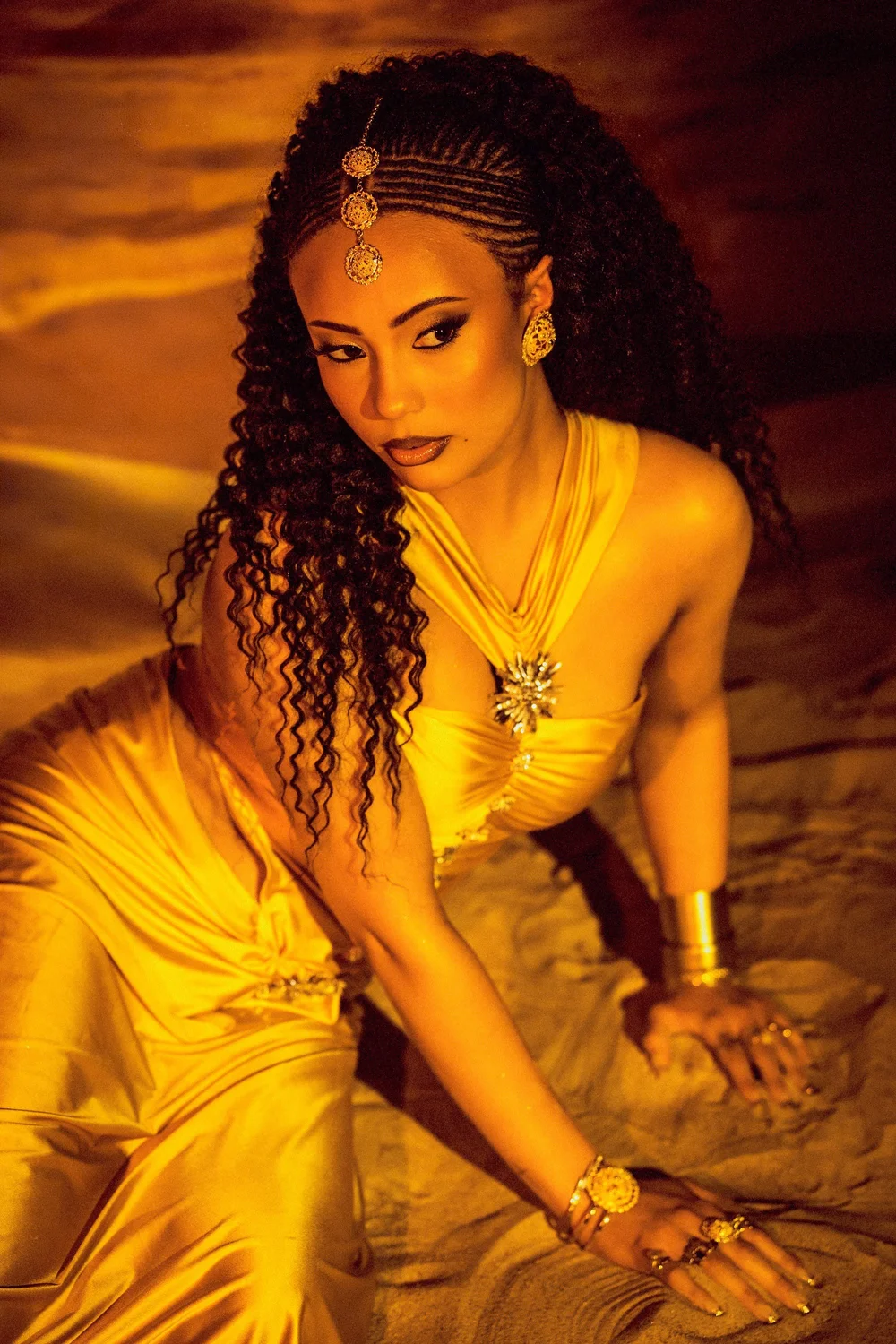
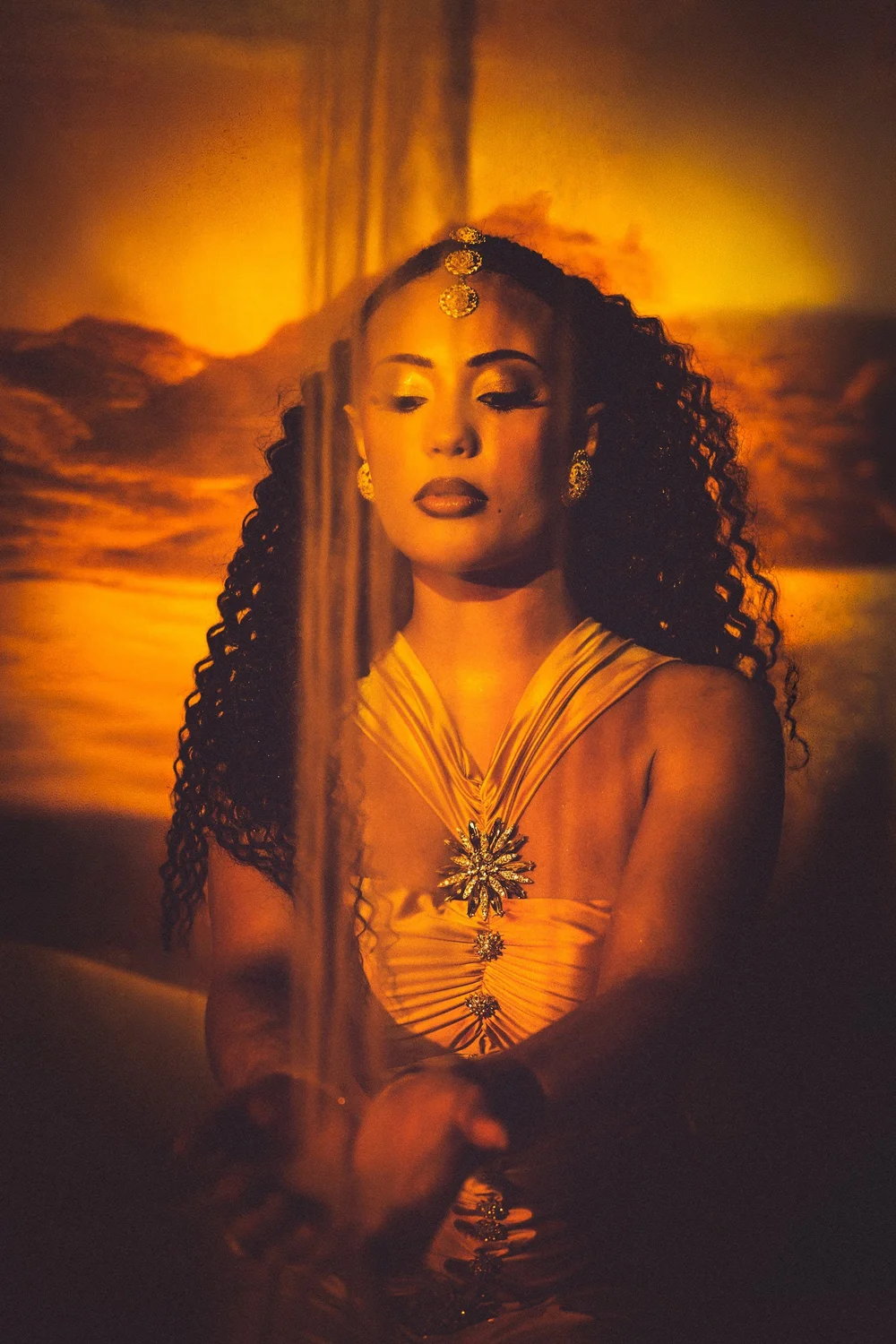
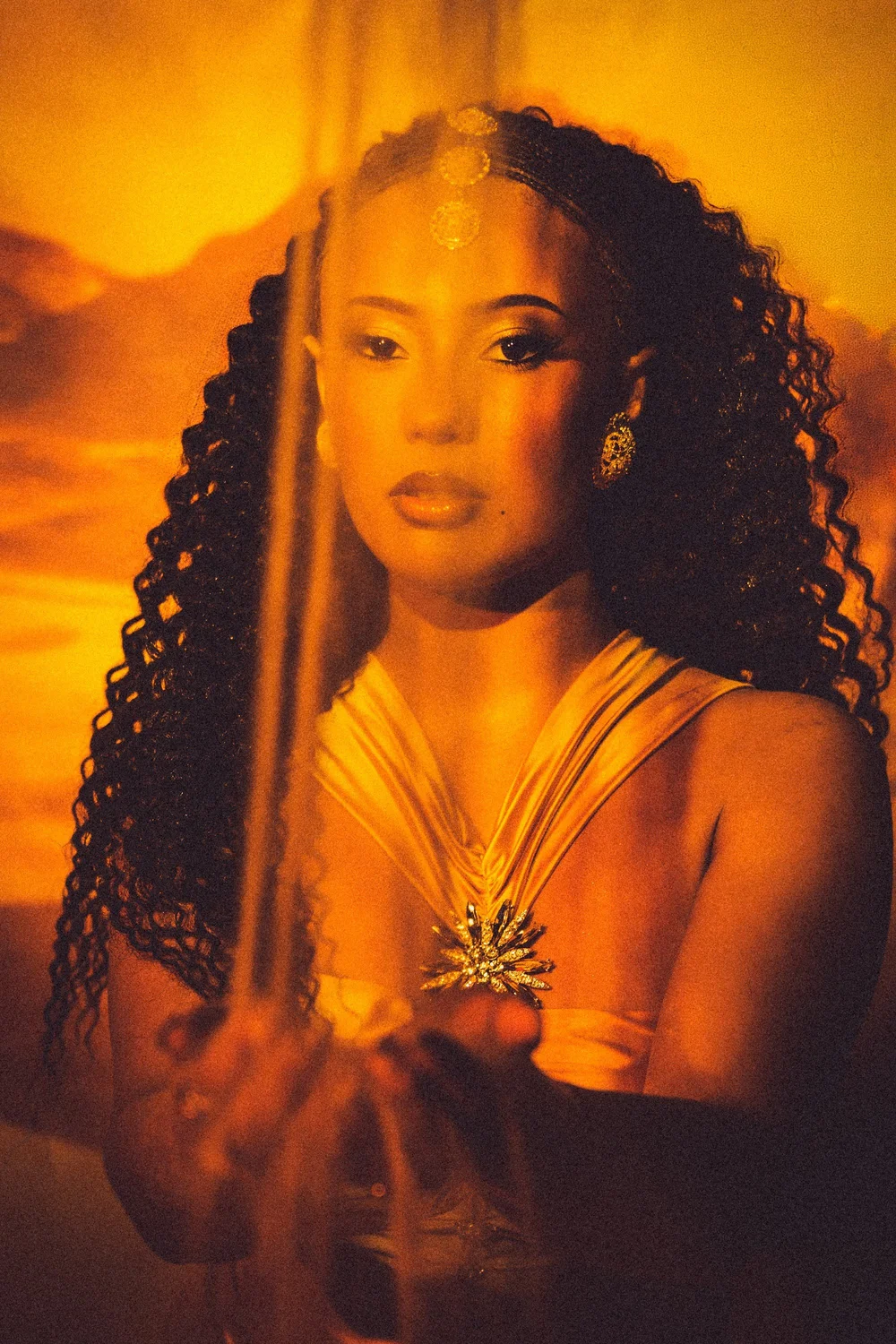
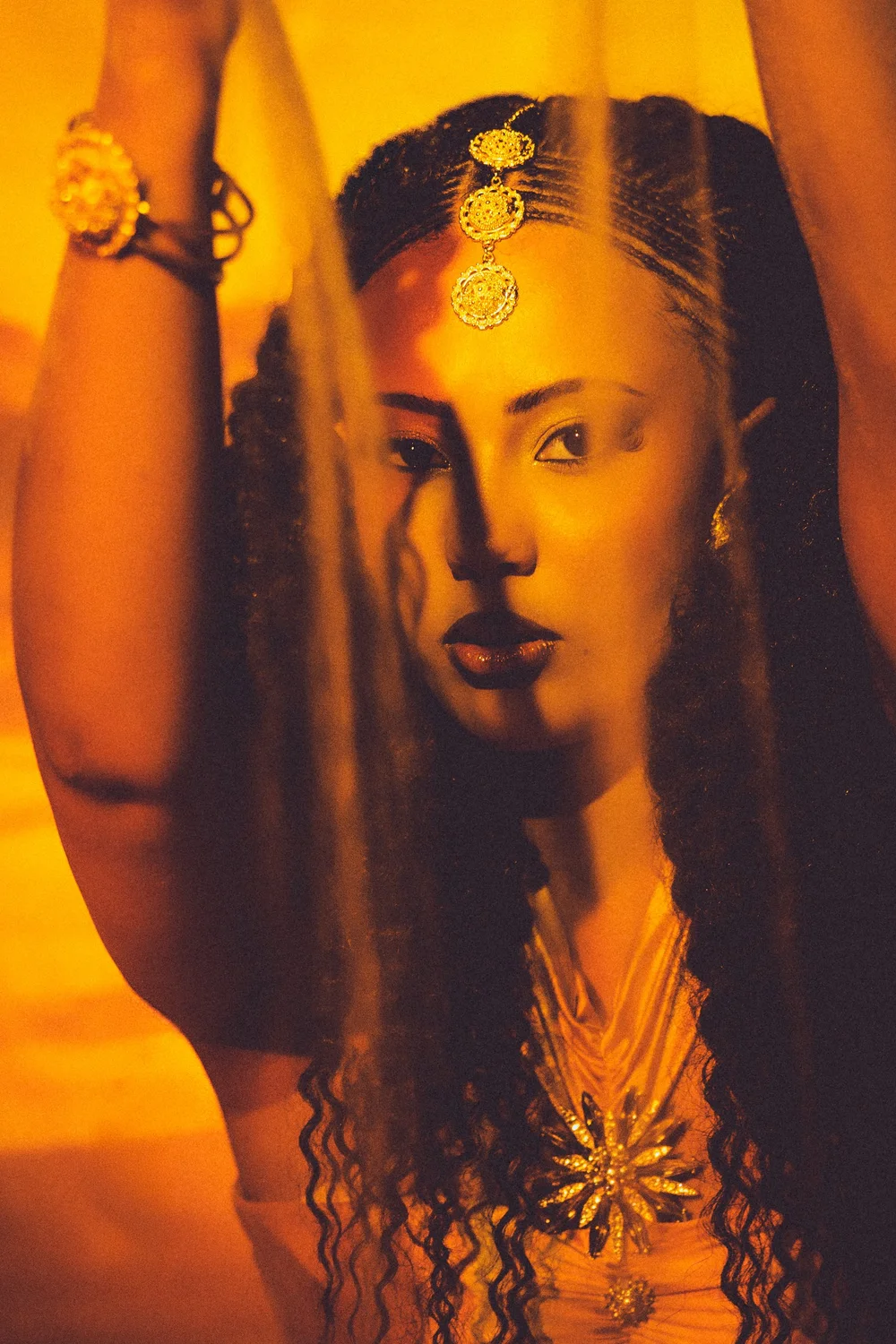
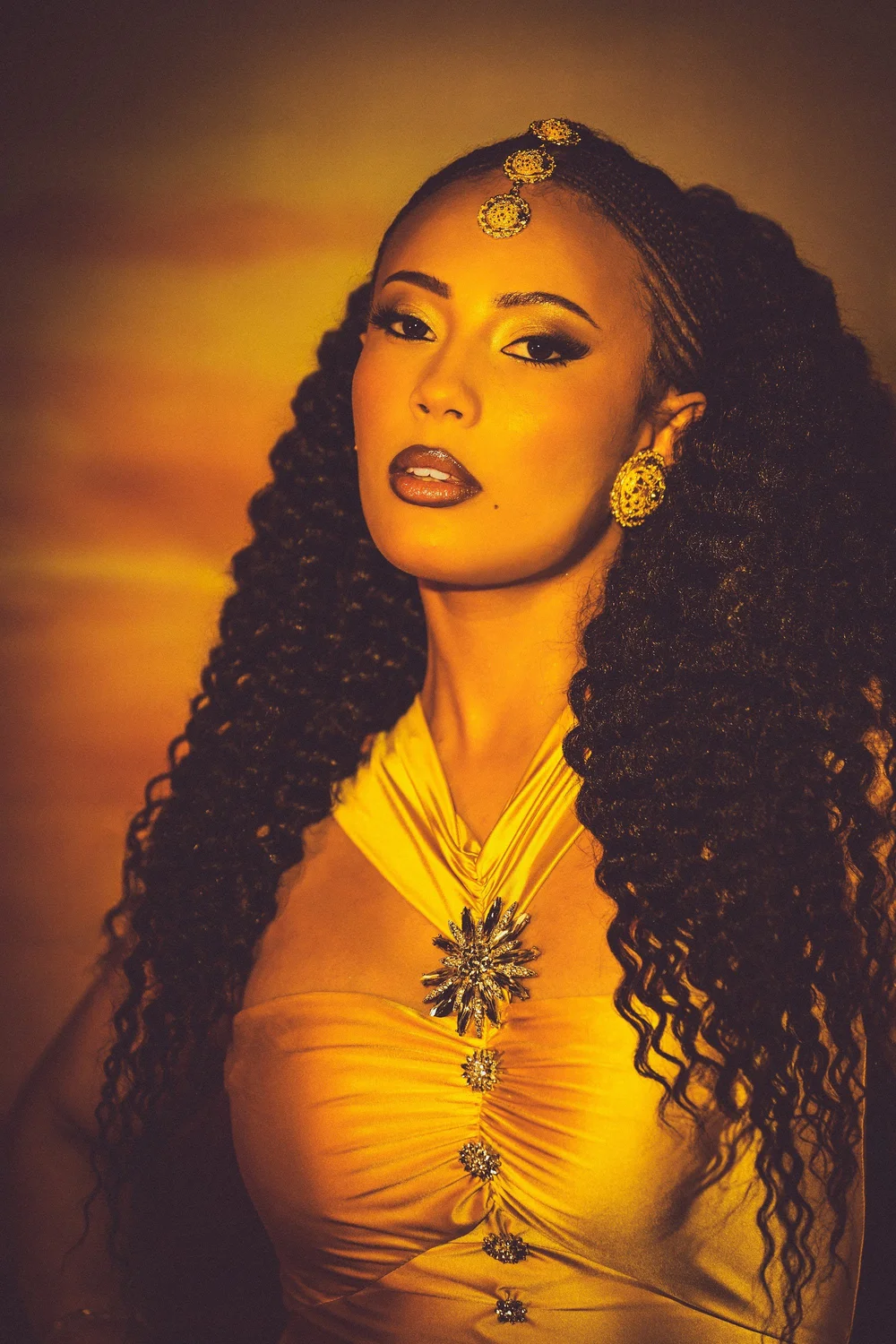
The whole shoot runs off a single hard key placed low and behind, firing through the dune line to create the horizon glow. A low backlight does three things at once: it separates the subject from the background without a rim light, it throws the long shadows that give the sand its shape, and it wraps the gold fabric so the garment reads as metallic rather than yellow. Fill came from a bounce on the floor, not a second head.
The 12ft ceiling is the hidden ingredient
You cannot make a sky indoors in a room with a low ceiling. The gradient from deep amber at the horizon to near-black at the top of frame needs height to fall off naturally. Our rooms run 12ft, which is what lets the background breathe above the subject — and that empty top third is exactly where the artist name and album title go.
The images
Shot by Pass The Lens at STU 22, Wapping. Every frame below came out of the same single-day session.
What a shoot like this costs
All rates exclude VAT. Power, cleaning, studio operations and a basic Aputure lighting and grip kit are included — there are no equipment, cleaning or facility fees. Full Kit upgrade is +£200 per booking day. One hour minimum.
A build like the desert set is a full-day booking. For a cover shoot with no set build — a clean colour backdrop, a single strong light — a half day is usually enough, and plenty of covers have been made here in three hours.
Shooting your own cover here
Bring the crop, not the mood board
Decide your square before you arrive. Shoot wide enough that the square crop lives inside the frame with room above the head for type. The best covers are shot loose and cropped tight, never the reverse.
Pick one colour and commit
Gold here. It could be deep red in The Blackout, or flat white in The Cove. Covers that try two palettes end up reading as neither.
Build the press set in the same day
You are already lit, already styled, already warmed up. Keep the last hour for vertical press frames and social crops. Most artists who book a cover shoot here leave with a quarter of a year of content.
24-hour licence, so the clock is yours
We hold a 24-hour premises licence. Overnight and late-night sessions are available on request at special rates — useful when a release date is close and the only free day is a Sunday night.
Questions we get asked
How much does an album cover photoshoot cost in London?
At STU 22 the studio is the main cost and it is hourly, from £35 per hour plus VAT for The Portal, £110 per hour for The Blackout and £120 per hour for The Cove. A half day in The Cove is £450 and a full day is £850, both excluding VAT. Those rates are all-inclusive: power, cleaning, studio operations and a basic lighting and grip kit are in the price, with no equipment or facility fees added on top. A photographer, stylist and any set build are separate and depend on who you bring.
How long does an album cover shoot take?
Three hours is enough for a single clean setup on a colour backdrop. A full day is right when there is a set to build, more than one look, or a press set to shoot alongside the cover. The desert shoot on this page was one full day, including the build.
Can I build a set in the studio?
Yes. Set builds are welcome in both The Cove and The Blackout, and the 12ft ceilings give room to work. Tell us what you are building when you book so we can allow time for load-in and strike, and so nothing on the floor is a surprise.
Which room is best for an album cover?
The Blackout if your cover is dark, moody or needs haze and controlled light, because it is a total light seal. The Cove if your cover is bright, clean or needs a seamless white or coloured background. If you are not sure, message us a reference image on WhatsApp and we will tell you which room gets you there faster.
Do you have a photographer, or do I bring my own?
Both work. Many artists bring their own photographer. If you do not have one, tell us what you are making and we will point you to someone whose work fits — the images on this page were shot by Pass The Lens.
Can I shoot at night or at the weekend?
Yes. STU 22 holds a 24-hour premises licence, so overnight, late-night and weekend sessions are available on request at special rates. These are arranged in advance rather than walk-up, so send us the end time you actually want.
Where is the studio and how do I get there?
8-10 Sampson Street, Wapping, London E1W 1NA. Ten minutes from Shoreditch, close to Tower Bridge, Wapping and Shadwell, and a short hop from Canary Wharf.